




Legibility Standards in Pharmaceutical Capsule Printing
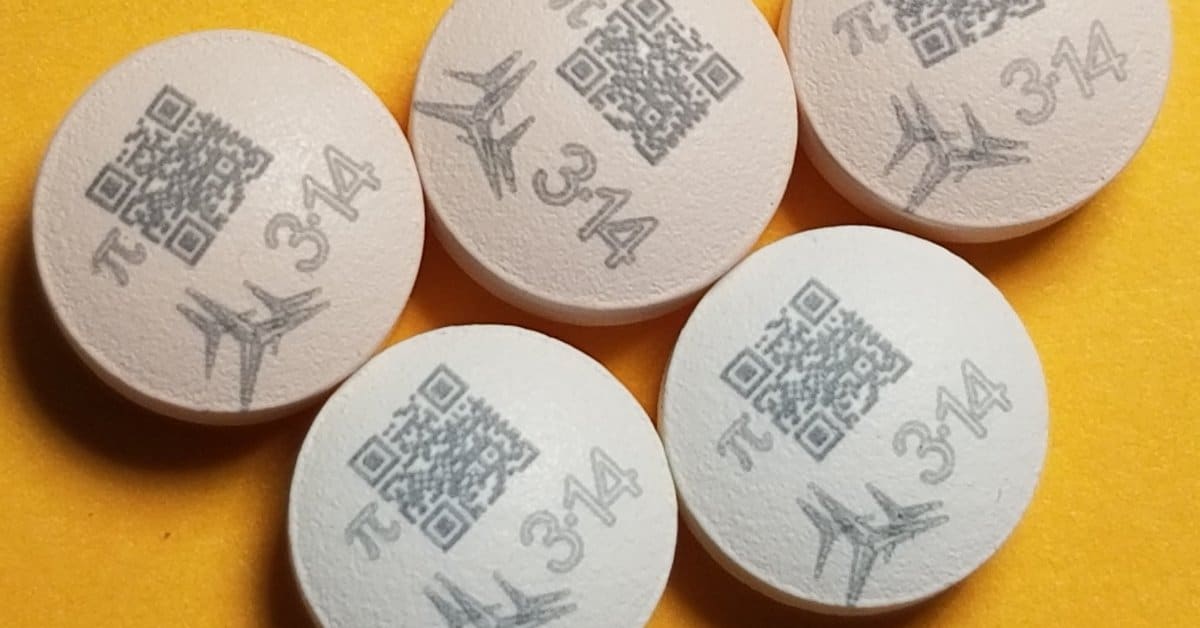
Pharmaceutical capsule printing does more than place a logo, code, or identifier on a dosage form. It supports product identification, quality control, medication safety, and anti-counterfeiting efforts throughout the product lifecycle. When a capsule mark lacks clarity, manufacturers can face risks in dispensing, handling, verification, and patient use.
For pharmaceutical manufacturers, legibility depends on both regulatory expectations and practical production controls. A mark must remain readable at the point of manufacture, after packaging, and through normal handling conditions. That requirement makes legibility a process issue, not just a design issue. Below, we’ll take a closer look at the legibility standards in pharmaceutical capsule printing, and more.
Why Legibility Matters in Capsule Identification
Legible capsule printing helps distinguish one drug product from another when size, shape, or color alone cannot provide enough certainty. This matters in manufacturing, packaging, pharmacy handling, clinical use, and adverse event review. A clear mark can help identify the product, manufacturer, strength, or other identifying information when the capsule is outside its packaging. Tri-Star Technologies designs its tablet and capsule marking systems for these kinds of identification challenges, giving pharmaceutical manufacturers a non-contact way to apply clear, permanent marks on compatible dosage forms.
Legibility also supports internal quality systems. During development, scale-up, and commercial production, teams must prove that they can apply the mark consistently without compromising the dosage form. That is why tablet marking and capsule printing decisions should account for the product’s surface, formulation, coating, color, geometry, and handling path before locking in production parameters.
The Core FDA Standard: 21 CFR Part 206
For solid oral dosage forms in the United States, 21 CFR Part 206 is the most relevant regulatory starting point. This regulation applies to solid oral dosage form human drug products unless an exemption applies. It requires a code imprint that, together with the product’s size, shape, and color, permits unique identification of the drug product and the manufacturer or distributor.
This means legibility must serve identification. A mark must remain clear enough to support the identification function. If the code cannot be read with reasonable consistency, the printing process may fail the practical expectation behind the rule.
How 21 CFR Part 211 Connects to Printing Controls
21 CFR Part 211 is another legibility standard in pharmaceutical capsule printing that covers current good manufacturing practice for finished pharmaceuticals. Its packaging and labeling controls do not create a capsule-specific font size rule, but they do establish expectations for controlled procedures, label examination, production records, and prevention of mix-ups.
Manufacturers should treat capsule marking parameters as controlled process inputs. That includes artwork, code content, orientation, placement, contrast, inspection criteria, equipment settings, and rejection limits.

FDA Medication-Error Guidance and Product Design
Food & Drug Administration (FDA) guidance on product design to minimize medication errors gives manufacturers another useful lens for capsule printing. The guidance encourages product design decisions that reduce confusion and support safe use. For capsules, that can include careful evaluation of color, size, shape, imprint clarity, and similarity to other products.
A capsule with a weak, crowded, or low-contrast mark can increase confusion when it resembles another dosage form. A more legible mark can help differentiate products during handling and verification.
Anticounterfeiting Guidance and Physical Identifiers
FDA guidance on physical-chemical identifiers addresses solid oral dosage forms for anticounterfeiting. While this guidance does not function as a general capsule-printing rule, it matters when manufacturers consider identifiers that help authenticate a product.
For laser-based capsule identification, this reinforces a key principle: the identifier must not create unacceptable changes to the product. Manufacturers must evaluate the mark as part of the full dosage form system, including formulation, coating, packaging, and quality attributes.
Why There Is No Single Universal Legibility Measurement
Pharmaceutical teams sometimes look for one universal legibility standard that defines the exact character height, contrast level, or viewing distance for every capsule. In practice, capsule printing does not work that way. A mark that reads clearly on a large white capsule may not perform the same way on a small, curved, dark, glossy, or translucent capsule.
Instead, manufacturers typically define product-specific acceptance criteria. Those criteria may include visual readability, code completeness, contrast, placement tolerance, orientation, smearing, deformation, and durability after handling or packaging.
Capsule Geometry and Surface Conditions
Capsule shape strongly affects legibility. A curved surface changes how a mark appears from different viewing angles, and the capsule seam can interrupt placement if the process does not account for orientation. Gelatin capsules, softgels, caplets, coated tablets, and specialty dosage forms each present different marking challenges.
Surface finish also matters. Gloss, color, translucency, coating chemistry, and pigment response can influence mark contrast. During development, teams should test the actual dosage form rather than relying only on a flat coupon or a different capsule type.
Process Parameters That Affect Legibility
Legibility depends on the relationship between the marking method, the dosage form, and the production setup. For UV laser marking, parameters such as pulse energy, beam size, repetition rate, mark speed, focus, and artwork density can influence contrast and clarity. If teams push one variable too far, they may improve apparent darkness while reducing edge definition or creating unnecessary process risk.
A controlled process should define the operating window that produces clear, repeatable marks without damaging the product. That window should account for normal variation in capsule position, surface finish, and incoming material.
Tri-Star’s UV laser marking equipment helps manufacturers manage these variables by supporting controlled mark placement, repeatable exposure, and high-resolution identification on compatible tablets, capsules, softgels, and related products. Because the process is non-contact, it can produce legible marks without printing pressure, ink transfer, or post-print drying steps.
How Tri-Star Equipment Supports Legible Capsule Printing
Tri-Star Technologies’ tablet and capsule marking systems give pharmaceutical manufacturers a practical way to apply these legibility principles. The equipment uses cold UV laser technology to create permanent, non-invasive marks on compatible solid oral dosage forms, including tablets, capsules, and softgels.
This matters because many capsule-printing issues come from the interaction between the product surface and the marking method. Ink-based processes can depend on surface condition, drying, cleaning, and transfer consistency. Tri-Star’s UV laser systems avoid those variables by using a non-contact process that can create high-resolution color-change marks on compatible TiO₂-pigmented products.
For pharmaceutical teams evaluating identification, inspection, or anticounterfeiting applications, this gives the marking process a more controlled foundation. Instead of adding ink to the surface, the system creates the mark through the interaction between UV laser energy and compatible pigmentation within the dosage form. That helps support mark permanence, clarity, and resistance to handling-related wear.

Inspection and Validation Expectations
Legibility standards become meaningful when teams can verify them consistently. Visual inspection may support early development work, but commercial production usually needs more structured acceptance criteria. Depending on the process, manufacturers may use camera inspection, sampling plans, documented operator checks, or validated vision systems.
Validation should demonstrate that the equipment can reproduce the approved mark under specific operating conditions. It should also confirm that the process can detect unacceptable marks and respond properly when a deviation occurs.
Tri-Star’s tablet and capsule marking systems can support these expectations by helping manufacturers define repeatable marking parameters during development, qualification, and production planning. The equipment gives teams a controlled platform for evaluating mark contrast, placement, readability, and durability on the actual dosage forms they plan to process.
Through-Packaging Marking and Handling Control
Some pharmaceutical workflows benefit from marking after a product enters clear blister packaging. This approach can reduce direct handling of the dosage form and support unique identification later in the packaging process. It can also help teams apply identifiers while maintaining the protective function of the package.
Tri-Star’s UV laser technology can support through-packaging marking when the blister material, product formulation, and application requirements are compatible, allowing manufacturers to evaluate identification after packaging without adding direct handling steps.
Through-packaging marking still requires careful qualification. Teams must evaluate the blister material, optical clarity, product position, mark contrast, and inspection method together. Manufacturers with existing packaging workflows can evaluate Tri-Star’s equipment as a modular marking solution that fits the process instead of forcing teams to redesign the entire line around a separate printing step.
Building a Practical Legibility Specification
A useful legibility specification starts with the mark’s purpose. The required code, character style, size, placement, and contrast should support identification under real handling conditions. The specification should also define unacceptable conditions, including partial characters, incorrect orientation, weak contrast, distorted marks, duplicate codes, and placement outside the approved zone.
Engineering, quality, regulatory, and production teams should agree on these criteria before full-scale implementation. That alignment helps prevent disputes during validation and routine production.
Legibility Starts With a Controlled Process
Capsule printing legibility standards begin with relevant regulatory expectations, especially 21 CFR Part 206 for solid oral dosage form identification and 21 CFR Part 211 for controlled pharmaceutical manufacturing. FDA medication-error and anticounterfeiting guidance also help teams think about capsule marks as part of product design, patient safety, and authentication. Together, these expectations show why a clear mark must be readable, repeatable, and appropriate for the dosage form.
A strong capsule printing process connects mark design, dosage form behavior, equipment capability, inspection, and validation. Tri-Star Technologies helps pharmaceutical manufacturers evaluate non-contact UV laser marking systems for tablets, capsules, softgels, and related products. Its equipment supports permanent, high-resolution identification on compatible dosage forms while helping teams reduce reliance on ink, drying, surface preparation, and contact-based printing methods.
To learn how the right marking approach can support legibility, identification, and production control, contact Tri-Star Technologies to discuss your application.