




The Role of Laser Marking in Process Standardization
Standardization gives manufacturers a repeatable way to produce consistent results across teams, shifts, facilities, and product lines. In marking and identification, that consistency depends on more than the laser itself. Teams need control over message content, mark placement, character size, spacing, contrast, material handling, and repeatability from one job to the next.
Tri-Star Technologies designs laser marking systems that help manufacturers control those variables through programmable job setup, software-driven mark parameters, non-contact marking, and production-ready system integration. Instead of treating marking as a disconnected step, Tri-Star equipment helps make identification part of a defined, repeatable workflow. Keep reading to understand the role of laser marking in process standardization and how Tri-Star’s systems support standardized marking, labeling, and identification processes.
Why Standardized Marking Matters in Manufacturing
Process standardization depends on the ability to define a method, repeat it, measure it, and verify it. Marking may seem like a small production step, but it connects directly to part identification, quality checks, production records, and downstream assembly.
When teams rely on inconsistent manual or contact-based marking methods, they can introduce avoidable variation. Character spacing, mark placement, orientation, contrast, and data accuracy may shift between operators or setups.
This is where equipment design becomes important. A standardized identification process requires a system that can repeat the same mark format, spacing, orientation, and placement across approved production runs. Tri-Star’s laser marking systems support that control by giving operators defined software inputs rather than relying on manual marking decisions at each setup.
For manufacturers working with wire, cable, medical devices, pharmaceuticals, aerospace components, defense applications, and industrial products, this can reduce variability in the application of identification. It also gives engineering and quality teams a clearer process to document, validate, and repeat.
How Laser Marking Supports Repeatable Processes
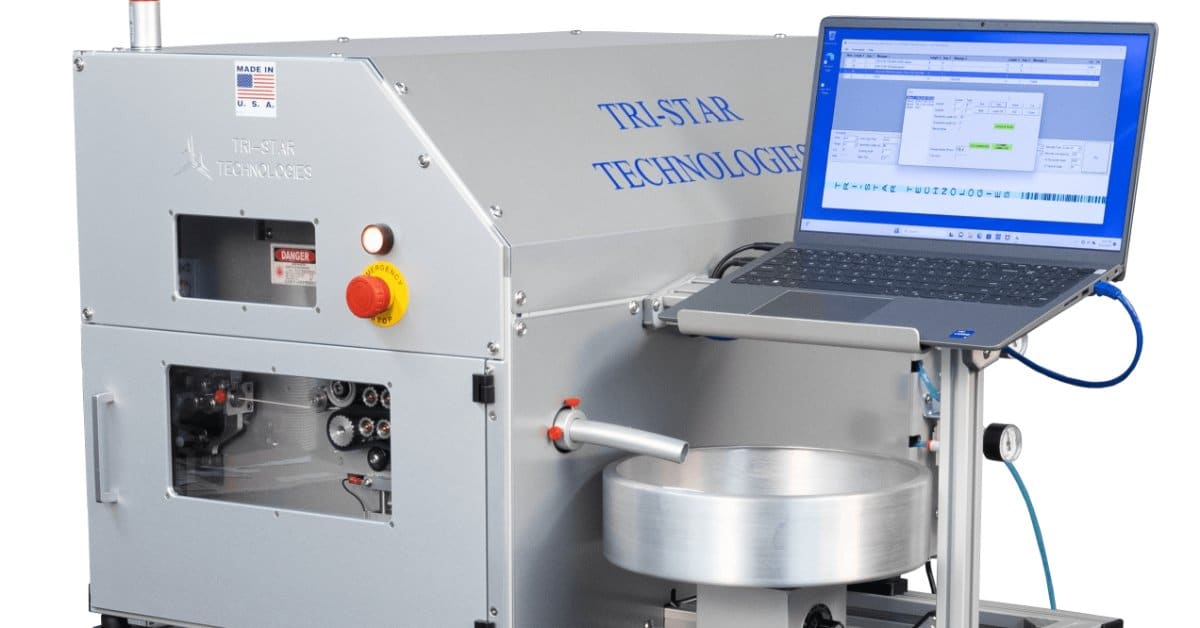
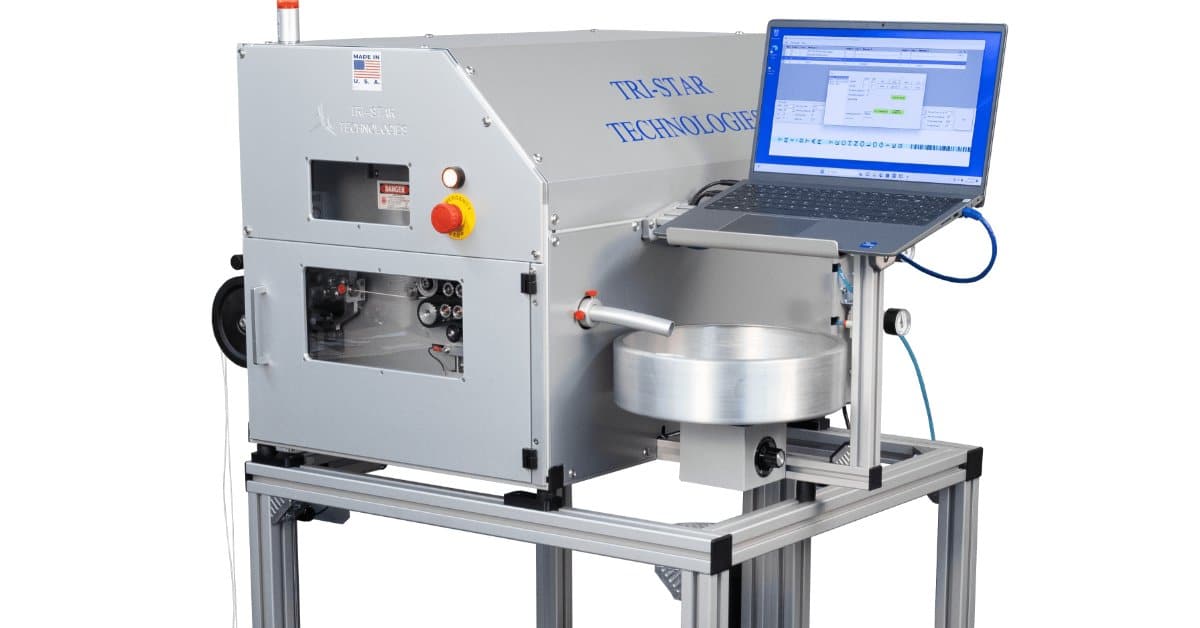
A UV laser marking machine supports standardization when it allows teams to define the marking process, save repeatable settings, and apply those settings consistently across production. Tri-Star’s M100LFG-TT-METEOR is one example. The system is fully programmable and includes routines for pulling, cutting, laser parameters, scanner parameters, and marking patterns.
That programmability helps standardize more than the appearance of the mark. It helps standardize the workflow around the mark, including the message, spacing between messages, cutting length, font, size, and print density. Once operators define those settings, they can store the task in the system’s memory and access it again when the same job returns.
Improving Setup Control
Laser marking also plays a role in process standardization by supporting repeatability, because it is a non-contact process. Tri-Star systems help reduce setup variation by moving key marking decisions into the equipment software. Operators can define message content, part numbers, gap spacing, leading space, font, marking scale, line spacing, character spacing, and multi-line spacing through the system interface.
This matters because setup variation can affect both production speed and mark consistency. When approved settings live inside the marking system, operators do not need to rebuild the process from memory. They can work from a defined routine that supports repeatability across jobs, operators, and shifts.
Connecting Tri-Star Marking Controls to Traceability
Traceability depends on accurate, durable, and readable identification. A mark must connect the physical product to the correct production record, inspection result, work order, lot, or assembly step. Tri-Star’s systems support that connection by giving teams a controlled way to manage what gets marked and how that mark appears.
For wire and cable applications, this can include part numbers, routing information, assembly identifiers, barcodes, and other production data. The M100LFG-TT-METEOR software supports different fonts, sizes, orientations, print densities, and barcode options, which helps teams align identification with internal traceability requirements.
Supporting Digital and Physical Records
Standardized marking helps physical products match the digital records that define them. When teams can load marking tasks through the computer or network and store them for later use, they create a stronger connection between the job data and the mark applied to the product.
That repeatability gives quality teams a clearer basis for inspection. Instead of judging each mark as an isolated result, they can compare the mark against the approved message, layout, spacing, orientation, and legibility requirements for that job.
Reducing Variation Across Operators and Shifts
Manufacturing variation can appear when different operators use different techniques to complete the same task. Tri-Star’s laser marking systems help reduce that risk by placing mark content, layout, spacing, and process parameters inside a programmable system.
The M100LFG-TT-METEOR, for example, can store marking tasks in system memory so operators can access them when needed. That helps each shift work from the same defined setup instead of recreating the marking process manually.
Supporting Inspection and Quality Control
Inspection teams need objective criteria. Tri-Star equipment supports that need by giving teams control over the variables that shape mark quality, including laser power, scanner parameters, font and character size, beam footprint, contrast, and wire type.
The M100LFG-TT-METEOR also supports controlled production by stopping automatically when malfunctions occur and displaying a specific error message. That helps prevent an out-of-control process from continuing unnoticed and gives technicians a clearer starting point for investigation.
Improving Corrective Action
If a mark falls outside the approved range, teams can investigate the specific process variable behind the issue. They may review the material, selected job, mark spacing, scanner settings, alignment, contrast, or software inputs rather than treating the issue as a random defect.
This creates a more useful corrective action process. Instead of relying on informal adjustments, teams can return to the defined settings, confirm whether the process changed, and update the setup through the proper engineering or quality review.
Standardization in Wire and Cable Marking
Wire and cable production shows how Tri-Star equipment can support standardization across a larger workflow. Identification must stay readable after spooling, cutting, stripping, routing, and final assembly. If wire marks lack consistency, downstream teams may spend more time sorting, verifying, or reworking material.
Tri-Star’s laser marking systems are designed to help control those variables. The M100LFG-TT-METEOR uses XY scanning beam technology to mark with different fonts, sizes, orientations, and print densities. This gives manufacturers a repeatable way to adapt mark layout to the wire, cable, or production requirement without changing the basic identification process.
Integrating Marking Into the Production Workflow
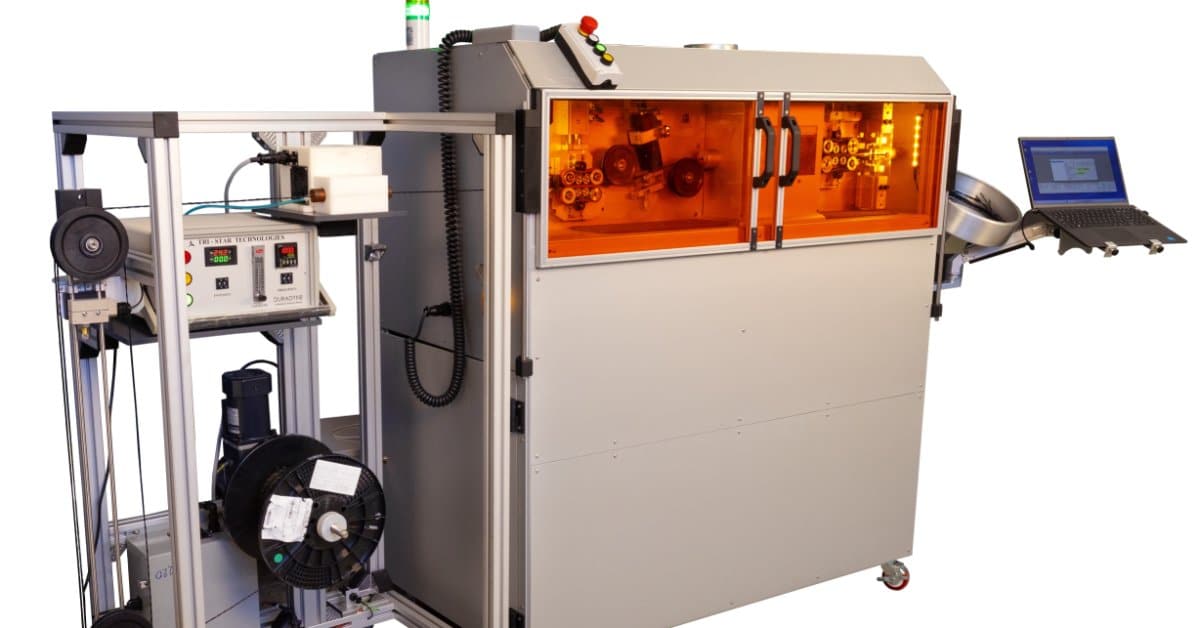
Tri-Star’s in-line laser marking systems also help standardize identification by placing the marking step directly into production. The M100LFGTTA-METEOR In-Line UV Laser Marking System is designed for continuous wire, cable, and filament production, including extrusion and reel-to-reel environments.
In these workflows, encoder synchronization helps maintain consistent mark placement as line speeds change. Automated focus control and modular system configuration help the equipment adapt to different wire and tubing diameters, which can make it easier to standardize marking technology across multiple production lines.
Aligning Tri-Star Equipment With Production Flow
Standardization does not require every facility to use the same machine in the same way. It requires each process to match the production environment and produce repeatable results. Tri-Star supports that need with systems that can be configured for stand-alone marking, in-line production, and integration with other wire processing equipment.
For example, a manufacturer that marks cut wire batches may need flexible job setup and stored routines. A producer running continuous extrusion may need encoder synchronization, stable material guidance, and consistent mark spacing at changing speeds. Tri-Star’s equipment gives teams a way to standardize identification around those real production conditions.
Material Compatibility and Parameter Control
Standardized marking depends on validated material compatibility. Different materials respond differently to laser marking, and teams must confirm that the process produces the required legibility without compromising the product.
Tri-Star systems support that validation work by giving teams control over mark parameters such as laser power, scanner settings, dot spacing, character size, line spacing, and contrast. Once teams establish approved settings for a material or product family, they can repeat those settings instead of adjusting the process through trial and error.
Building a Validated Marking Process
Tri-Star’s value in process standardization comes from pairing the mark with a controlled, repeatable setup. The mark itself matters, but the process behind the mark matters just as much.
When teams can define the marking routine, store the job, control the mark layout, and monitor system faults, they create a stronger foundation for validation. That helps quality teams verify not only that a mark is readable, but that the process used to create it follows a consistent method.
Avoiding Process Drift
Process drift can occur when small changes accumulate over time. In marking, that might mean a slight change in spacing, a different font size, a modified orientation, or an informal adjustment to improve contrast during one shift.
Tri-Star systems help reduce that risk by keeping key variables inside software settings. When a change becomes necessary, teams can evaluate it through the proper engineering or quality process instead of letting informal changes become the new standard.
Laser Marking as Part of a Standardized Production System
Manufacturers gain the most value when they treat marking as part of the production system, not as a finishing detail. Identification affects material control, inspection, assembly, compliance documentation, and field support.
Tri-Star’s laser marking systems support that larger production role by controlling what gets marked, how it gets marked, where it appears, and how the job repeats. That makes marking part of the standardized workflow rather than a separate step that introduces avoidable variation.
Building Consistency into Product Identification
Process standardization requires control at every step, including identification. Tri-Star Technologies helps manufacturers bring that control to marking, labeling, and product identification through programmable job setup, software-defined mark parameters, stored routines, non-contact processing, and production-ready system integration.
As production environments become more connected and quality requirements become more demanding, marking systems need to do more than apply readable characters. They must support the larger manufacturing process with consistency, flexibility, traceability, and validated performance.
Tri-Star Technologies provides laser marking systems for demanding production environments, including wire, cable, medical device, pharmaceutical, aerospace, defense, and industrial applications. To learn more about selecting the right system for your process, contact Tri-Star Technologies to discuss your application or schedule a demo.