




Laser Marking Machines in Clean Manufacturing Spaces
Manufacturers that work in controlled or cleanliness-sensitive environments must think beyond whether a marking method produces readable identification. They also must consider how that process affects the surrounding workspace, the product they’re marking, and the consistency of production.
This matters in industries such as medical device manufacturing, pharmaceuticals, aerospace, and advanced manufacturing. Each environment comes with different controls, but they share a need for precise processes that minimize unnecessary materials and handling.
Laser marking machines fit in clean manufacturing spaces particularly well. A properly selected system provides permanent identification without relying on inks or routine contact between a marking tool and the product.
Why Clean Manufacturing Spaces Change Marking Requirements
A conventional manufacturing floor may tolerate processes that introduce consumables, require frequent cleanup, or depend on significant operator handling. Controlled manufacturing spaces place greater emphasis on managing those variables.
Every additional material in production can create another consideration for storage, handling, cleanup, and process control. A marking process that requires inks, solvents, transfer materials, or similar supplies can add steps that manufacturers must account for within their workflow.
The equipment itself also matters. Manufacturers must evaluate where a machine will sit, how operators will load materials, how the process interacts with surrounding operations, and whether the equipment can support safety controls.
Reducing Contact During Product Identification
Non-contact marking can simplify this part of production. Because a laser delivers its energy without a marking head physically touching the product, manufacturers can reduce the mechanical interaction associated with certain other identification methods.
That characteristic becomes particularly valuable with sensitive products. Medical tubing, catheters, wire insulation, and other delicate substrates may require identification without introducing unnecessary physical force or another transfer medium.
How Laser Marking Supports Cleaner Production
For manufacturers evaluating industrial laser marking systems, cleanliness depends on more than the appearance of the mark. The process must fit into the broader production environment without creating unnecessary complexity.
Laser marking machines in clean manufacturingspaces eliminate the need to transfer ink from a print head, pad, stencil, or similar component to the workpiece. That reduces dependence on marking consumables and eliminates several material-handling steps associated with conventional printing.
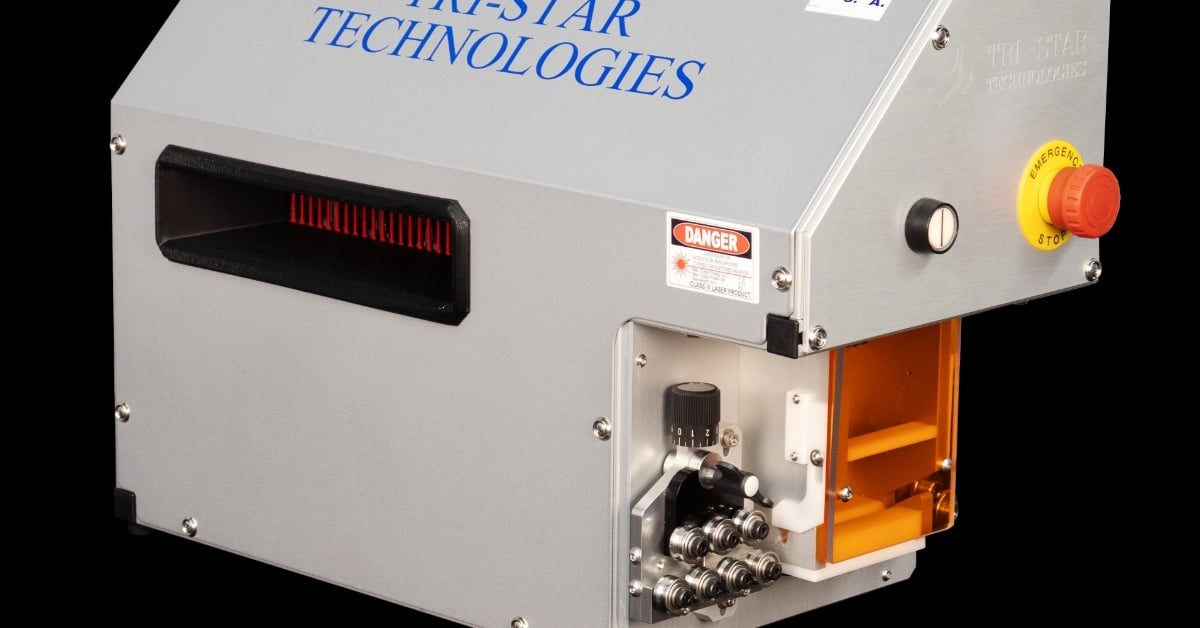
Tri-Star Technologies designs its 355 nm UV laser marking systems to create permanent, non-destructive marks on compatible substrates. Its systems are suitable for applications ranging from wire and cable identification to sensitive medical devices.
Less Reliance on Marking Consumables
Consumables affect more than purchasing costs. They also must enter the facility, remain properly stored, move to the production area, and eventually leave the process as empty containers, cleaning materials, or other waste.
A laser system removes inks from the marking process itself. Manufacturers still need appropriate procedures for the equipment and surrounding production area, but eliminating a recurring marking material can simplify one part of contamination control.
Why UV Laser Technology Matters for Sensitive Products
Different laser technologies interact with materials in different ways. Selecting a system for a controlled manufacturing environment requires manufacturers to understand that interaction rather than treating every laser as interchangeable.
Tri-Star uses UV laser technology for applications where maintaining the integrity of the substrate matters. Its systems use a 355 nm solid-state UV laser to produce non-destructive identification on compatible materials.
This approach supports applications involving sensitive components because the marking process can produce identification without relying on applying a consumable layer to the surface. Qualification remains important because manufacturers must confirm that a particular substrate responds properly to the laser and produces the necessary contrast.
Medical Device Applications
Medical device production highlights the importance of matching the marking system to both the product and the manufacturing environment. Catheters, tubing, syringes, and other components may have narrow dimensions, sensitive surfaces, or strict identification requirements.
Tri-Star’s M100L-FG-CT, for example, is for catheter and medical tubing applications. A system specifically for this type of material gives manufacturers a more controlled approach than trying to adapt a general-purpose marking process to a sensitive product.
Machine Design Matters in a Controlled Space
The laser itself represents only one part of the equation. Enclosure design, safety controls, material handling, and operator interaction all influence whether the machine fits the intended production space.
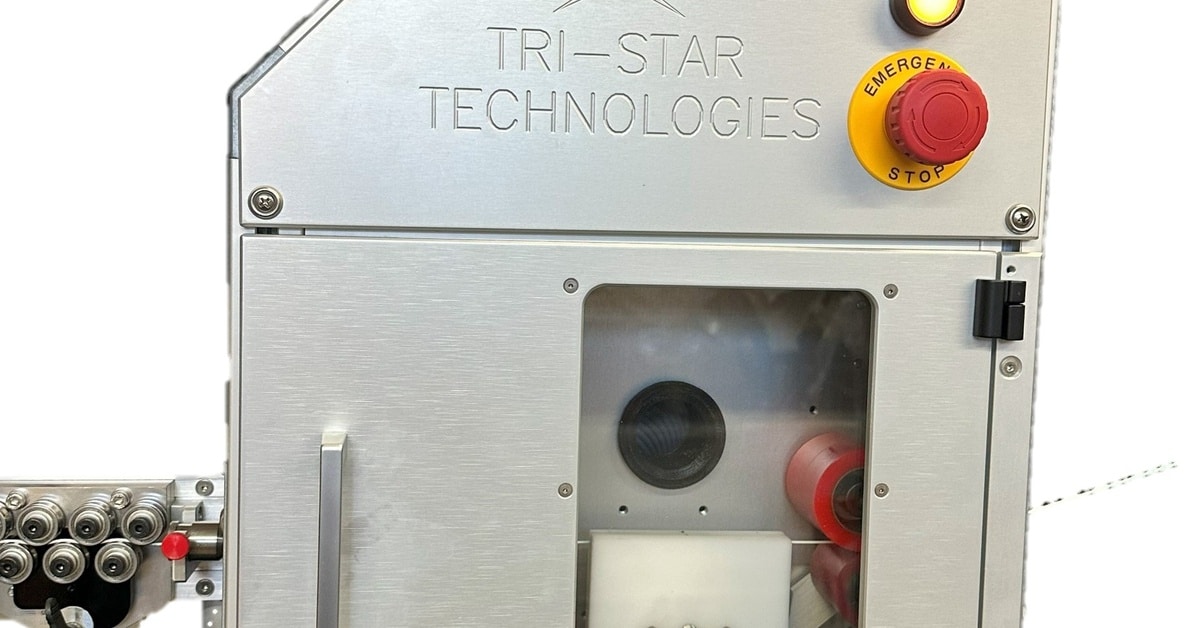
Tri-Star’s Class 1 laser marking machines can operate in environments that include medical manufacturing facilities and open production floors. Its M100LFG-TT-METEOR system, for example, includes an enclosed system with internal and external interlocks that automatically stop the laser if a door or cover opens.
These safeguards help separate the laser process from routine operator activity. Manufacturers should still incorporate the equipment into their own facility-specific safety, quality, and cleanliness procedures.
Integrating Marking into the Manufacturing Process
Clean production does not necessarily mean isolating every process in its own separate station. In some facilities, better integration can reduce handling and make the process easier to control.
An in-line marking system can place identification directly within an established production sequence. This approach reduces the need to move partially processed materials to another station solely for marking before returning them to the main workflow.
Tri-Star’s M100L-FG-TT-METEOR can integrate with continuous wire, cable, and tubing production, with a production capability of up to 300 feet per minute. Its encoder-based operation synchronizes marking with material movement, helping maintain placement as line speed changes.
Automation Can Reduce Manual Handling
Automation can also reduce the number of times personnel must reposition products during processing. That may support cleaner workflows while improving consistency between production runs.
The right level of automation depends on the application. A medical manufacturer processing individual components may have very different handling requirements from a wire producer running continuous material from a spool.
What Manufacturers Should Evaluate Before Installation
A clean manufacturing environment does not automatically make one marking technology appropriate for every product. Manufacturers must qualify both the material and the process.
Start with substrate compatibility. The material must respond appropriately to the selected wavelength while producing the necessary contrast and maintaining product integrity.
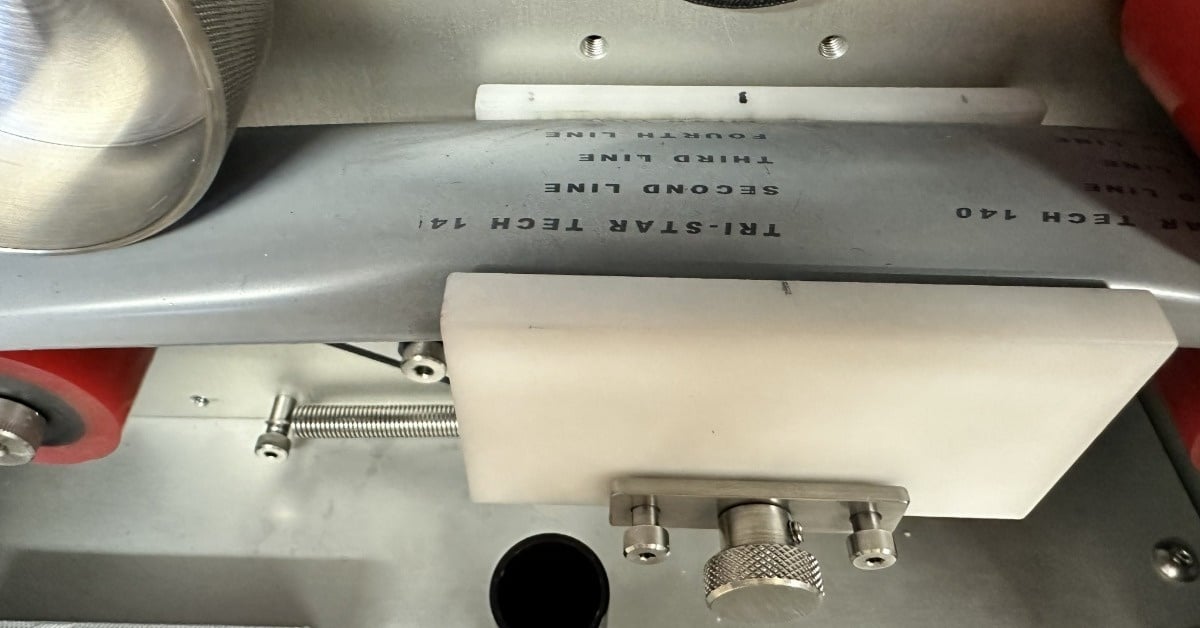
Next, consider how the system will interact with production. Manufacturers should evaluate equipment placement, material loading, throughput requirements, extraction needs, operator access, and facility-specific cleanliness procedures before installation.
Choose a Marking Process That Fits the Environment
Clean manufacturing demands control at every stage of production, and product identification should follow the same principle. A marking process should create clear, durable information without introducing unnecessary consumables, handling steps, or disruption into a controlled workflow.
UV laser marking gives manufacturers a non-contact option that can work with sensitive materials while supporting permanent identification. Machine enclosure, automation, safety features, and integration options can further determine how effectively that technology fits into a particular facility.
Tri-Star Technologies develops laser marking equipment for applications ranging from portable, lower-volume processing to medical device marking and high-speed in-line production. If you are evaluating how laser marking could fit into a clean or controlled manufacturing space, contact Tri-Star Technologies to discuss your materials, production requirements, and marking application.