




Wire Marking Considerations for Mixed Gauge Applications
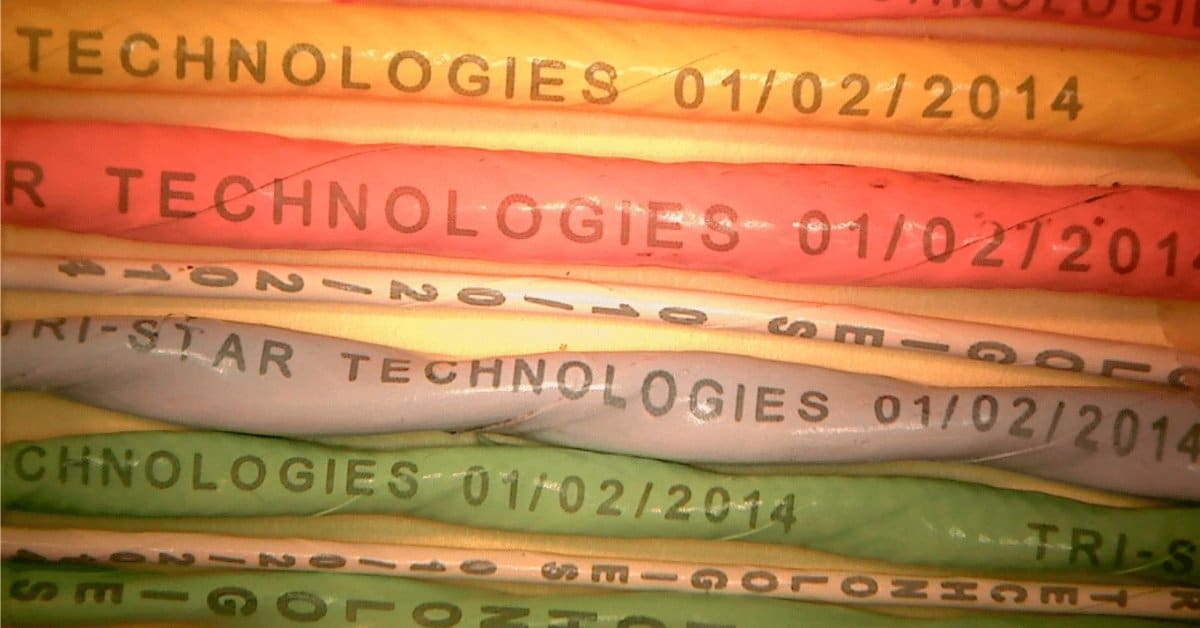
Mixed gauge wire processing creates a practical challenge for production teams: every wire must receive a clear, durable, and accurate mark, but not every wire behaves the same way in the marking process. Small-diameter conductors, larger cables, different insulation materials, variable jacket colors, and changing production speeds all affect the configuration of a marking system.
For harness manufacturers, aerospace suppliers, defense contractors, transportation manufacturers, and industrial wire processors, these differences matter. Keep reading to understand more about the key wire marking considerations for mixed gauge applications.
Why Mixed Gauge Applications Require Careful Planning
A wire marking machine for mixed gauge environments must handle more than one wire size without sacrificing legibility, placement accuracy, or throughput. In a single production schedule, an operator may move from fine-gauge wire to larger cable, then to tubing or wire with a different insulation type. Each change can affect how the material feeds, how it sits in the marking zone, and how the final mark appears.
Tri-Star Technologies designs wire marking systems for production environments where operators may need to process different wire gauges, insulation types, and marking requirements without turning identification into a bottleneck.
The goal is not only to create a readable identifier. The process also must protect production flow, reduce setup errors, and support repeatable results. When teams plan for gauge variation early, they can avoid marking inconsistencies that cause rework, slowdowns, or traceability concerns later in the process.
Wire Diameter and Mark Placement
Wire diameter directly affects the available marking surface. A small wire leaves less room for characters, symbols, spacing, and orientation, while a larger cable provides more surface area but may require different handling and support. If the marking system does not account for these changes, the mark may appear too small, too crowded, or poorly set.
Mixed gauge production also changes how the wire presents itself to the marking head. Smaller wires can shift more easily during feeding, while larger cables may require stronger guidance to maintain alignment. Consistent presentation through the marking zone helps center the mark, keeps it readable, and makes it repeatable from one production run to the next.
Insulation Type and Mark Contrast
Other wire marking considerations for mixed gauge applications include the type of insulation and the contrast of the mark. UV laser marking works especially well when the insulation contains titanium dioxide, because the UV energy interacts with the pigment to produce a permanent, high-contrast mark without relying on inks or labels.
When wire insulation does not support direct UV laser marking, manufacturers may need a different approach. In those cases, an inkjet system with plasma surface treatment can help improve surface wettability and adhesion before marking. That distinction matters in mixed gauge environments because production teams may process several wire constructions that do not respond the same way to a single marking method.
Handling Fine-Gauge Wire
Fine-gauge wire creates a narrow process window. The smaller the wire, the more important it becomes to control tension, alignment, character size, and mark spacing. Even a slight shift in wire position can affect legibility because of the constrained marking area.
Operators also must consider how much information belongs on the wire. Small conductors may not support large strings of text in the same orientation as larger cables. In these cases, careful font selection, character scaling, and mark orientation help maintain readability without crowding the surface.
Tri-Star’s UV laser wire marking systems use precise beam control and programmable marking parameters to support legible marks on fine-gauge aerospace wire, where character size, spacing, and orientation can make the difference between a readable identifier and an inconsistent mark.
Balancing Legibility and Production Speed
A darker, more detailed mark may require more marking time, depending on the system settings and character layout. In mixed gauge applications, teams need to balance legibility with production speed rather than apply one default setup to every wire size. Fine-gauge wires may require different spacing, orientation, or character settings than larger conductors.
This balance becomes more important in high-volume production. If the settings produce a readable mark but slow the line unnecessarily, throughput suffers. If the settings prioritize speed without enough attention to readability, the mark may fail inspection or create confusion during assembly.
Handling Larger Cable and Tubing
Larger cable and tubing introduce different challenges. The marking surface may be wider, but the material can be heavier, less flexible, and more difficult to guide. Larger diameters may also require more clearance, different fixtures, and more careful focus control.
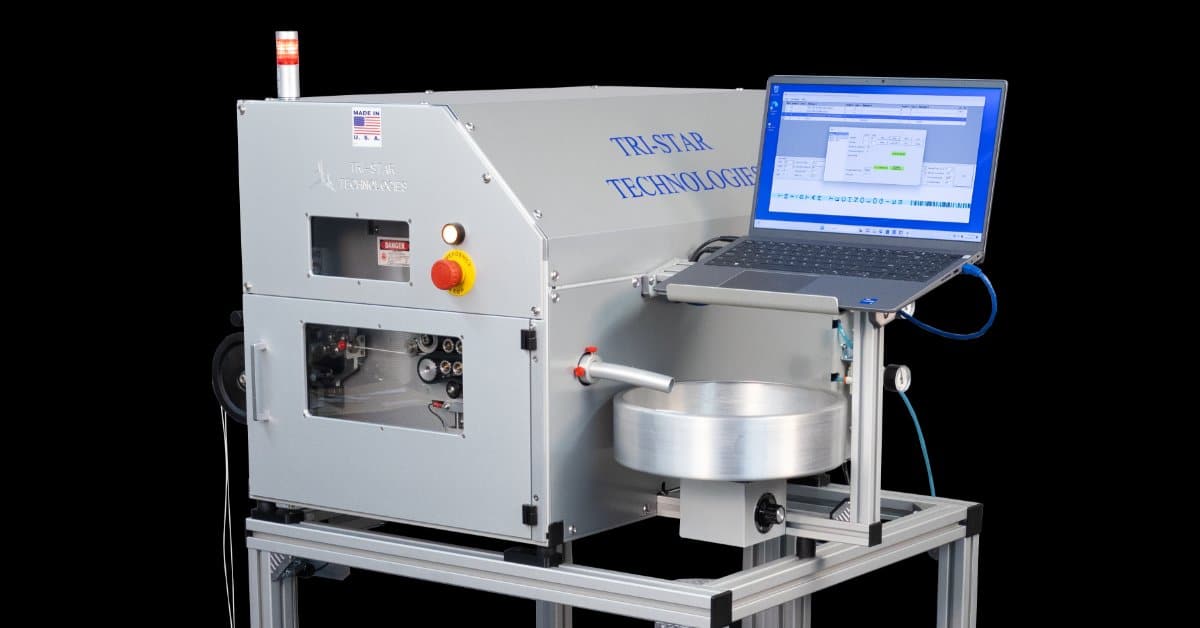
A cable marking machine for mixed gauge applications should accommodate these physical differences without forcing operators into excessive manual adjustments. If every gauge change requires a long setup process, the marking operation becomes a bottleneck. Flexible configuration helps production teams move between jobs while maintaining confidence in mark quality.
For larger mixed gauge applications, systems such as Tri-Star’s M100LFG-TT-METEOR can support in-line UV laser marking for wire, cable, and tubing, helping manufacturers maintain mark consistency as material diameter and production requirements change.
Maintaining Focus Across Diameter Changes
Marking quality depends on aligning the marking process properly with the surface. When wire diameter changes, the surface height changes as well. If the system does not maintain proper focus, marks may lose sharpness, contrast, or consistency.
This is especially important when production includes both small wire and larger cable. The marking system should support precise adjustment, so the mark remains clear across the expected size range.
Process Control Across Changeovers
Mixed gauge production places heavy demands on changeover control. Each new wire size may require different guides, settings, recipes, or mark layouts. Without a structured approach, operators may rely too heavily on memory, which increases the chance of errors.
Recipe-driven processes can help standardize setup. When settings for wire size, mark content, spacing, orientation, and speed connect to the job, operators can change production runs with less guesswork.
Tri-Star’s programmable wire marking systems support this kind of controlled setup by allowing teams to manage marking parameters, job information, and production requirements through a structured operator workflow.
Operator Workflow and Setup Confidence
A mixed gauge marking process should make the correct setup easy to follow. Clear software prompts, stored job parameters, and intuitive controls can reduce training burden and minimize the chance of incorrect settings. This becomes especially valuable when production teams handle many part numbers or short-run harness kits.
Operators should also confirm that the job matches the material before production begins. That verification step helps prevent avoidable mistakes, especially when wires look similar but require different markings.
Integration With Cutting, Stripping, and Coiling
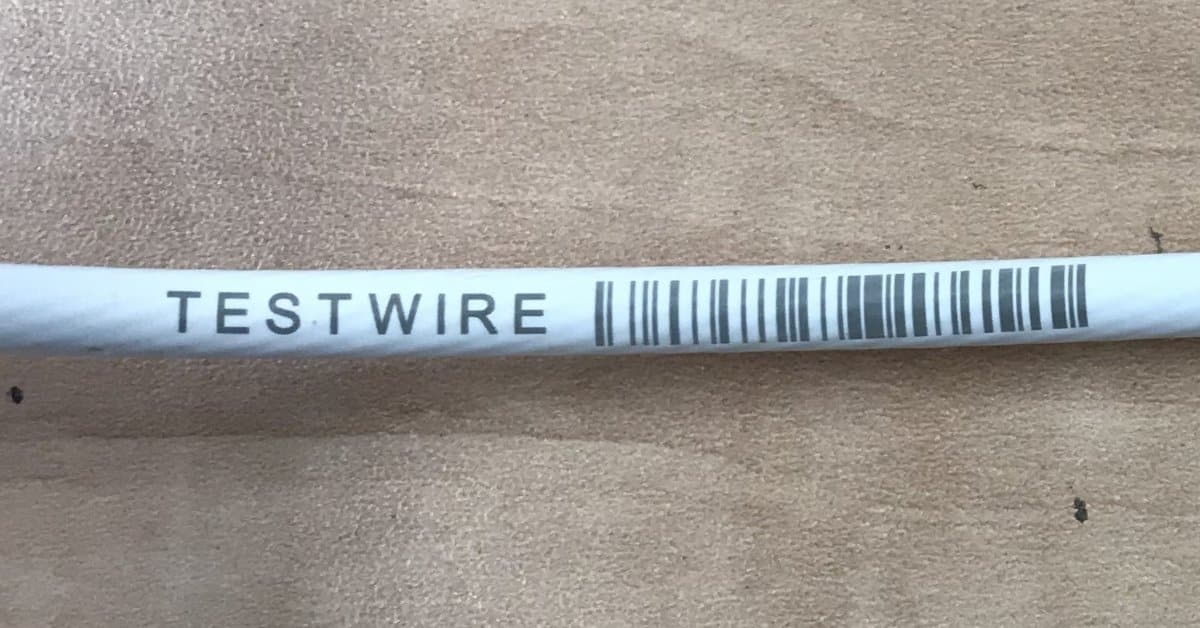
Wire marking rarely stands alone in a production environment. Many operations must dereel, measure, mark, cut, strip, and coil material in a controlled sequence. When mixed gauge work enters that sequence, each step must accommodate the same range of materials without creating misalignment or timing issues.
Integrated systems can reduce extra handling and help preserve production flow. If marking happens in sequence with other preparation steps, manufacturers can reduce work-in-process staging and lower the chance of material mix-ups.
Tri-Star’s wire marking systems can be configured for production workflows that include marking, cutting, stripping, and related wire preparation steps, allowing identification to become part of the process rather than a separate offline operation.
Matching Marking Speed to Line Speed
Mixed gauge production may involve different line speeds depending on material size, handling requirements, and downstream processing. A marking system must synchronize with those speed changes so mark placement remains accurate. Encoder-based control can help maintain consistent spacing when line speed changes during operation.
Without synchronization, marks may drift from their intended positions. That can create problems when downstream teams expect identifiers at consistent intervals or specific locations.
Build Mixed Gauge Marking Around Control and Consistency
Mixed gauge wire marking succeeds when manufacturers treat gauge variation as a process design issue, not just a machine capability. Wire diameter, insulation type, mark layout, handling stability, focus, speed, and changeover control all affect the result. When these factors work together, teams can produce clear, durable, repeatable marks across a wide range of wire and cable sizes.
Tri-Star Technologies supports mixed gauge wire marking applications with UV laser marking systems designed for precision, traceability, and production flexibility. From fine-gauge aerospace wire to larger cable and tubing, Tri-Star’s equipment helps manufacturers control mark quality, placement, and repeatability across changing production requirements.
To learn more about wire marking systems for mixed gauge applications, contact Tri-Star Technologies to discuss your production requirements and schedule a consultation.