




Ultraviolet vs. Green Lasers: What’s the Difference?
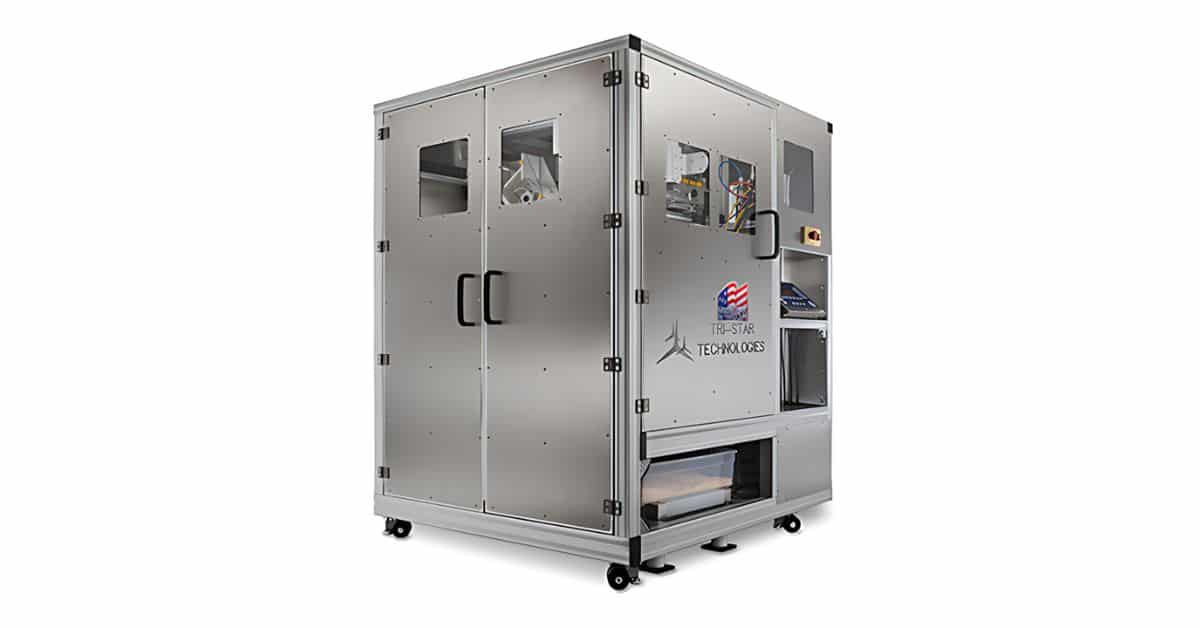
When pharmaceutical manufacturers evaluate marking technologies, the comparison between ultraviolet and green lasers usually comes down to one question: which system can create clear, permanent marks on sensitive products without compromising product integrity? For tablets, capsules, coated surfaces, and other delicate materials, that distinction matters. The wrong wavelength can reduce contrast, limit readability, or create process complications that slow validation and production.
Ultraviolet and green lasers both fall into the category of non-contact marking systems for sensitive applications, but they do not interact with materials in the same way. Keep reading to learn the difference between ultraviolet and green lasers.
Why Wavelength Matters in Pharmaceutical Marking
Laser wavelength affects how the surface of a tablet, capsule, coating, plastic, or film absorbs energy. That absorption pattern shapes the final result, including contrast, edge quality, and the force behind the application of the mark. Ultraviolet lasers operate at shorter wavelengths than green lasers, which gives them a different interaction profile on many sensitive materials. Green lasers, commonly operating at 532 nm, are also “cold marking” options because they can produce high-contrast marks with limited heat input on select substrates.
In practical terms, that means the wavelength is one of the main factors that determines whether a mark appears crisp, dark, legible, and repeatable. It also affects the utilization of a laser type across product variations. In pharmaceutical production and R&D, where surface coatings, colors, and shapes vary from one product to another, wavelength selection has direct process consequences. A laser that performs well on one substrate may deliver weak contrast on another, even when both products look similar to the naked eye.
How Ultraviolet Lasers Work
Ultraviolet laser marking can generate visible contrast without relying on aggressive material removal. UV laser marking does not change the material in a way that would create concern for sensitive pharmaceutical applications. The UV pharmaceutical laser marking equipment instead uses a photochemical reaction in the form of a pigment response.
In wire-marking applications, UV energy interacts strongly with titanium dioxide pigments, creating a visible color shift while keeping the mark shallow and high resolution. UV laser marking leaves permanent, indelible marks on the surface without altering material properties, and the process only affects shallow depths with very short pulse durations. This is known as “cold laser” marking because while it’s a laser mark, the laser does not use heat to alter or destroy the material.
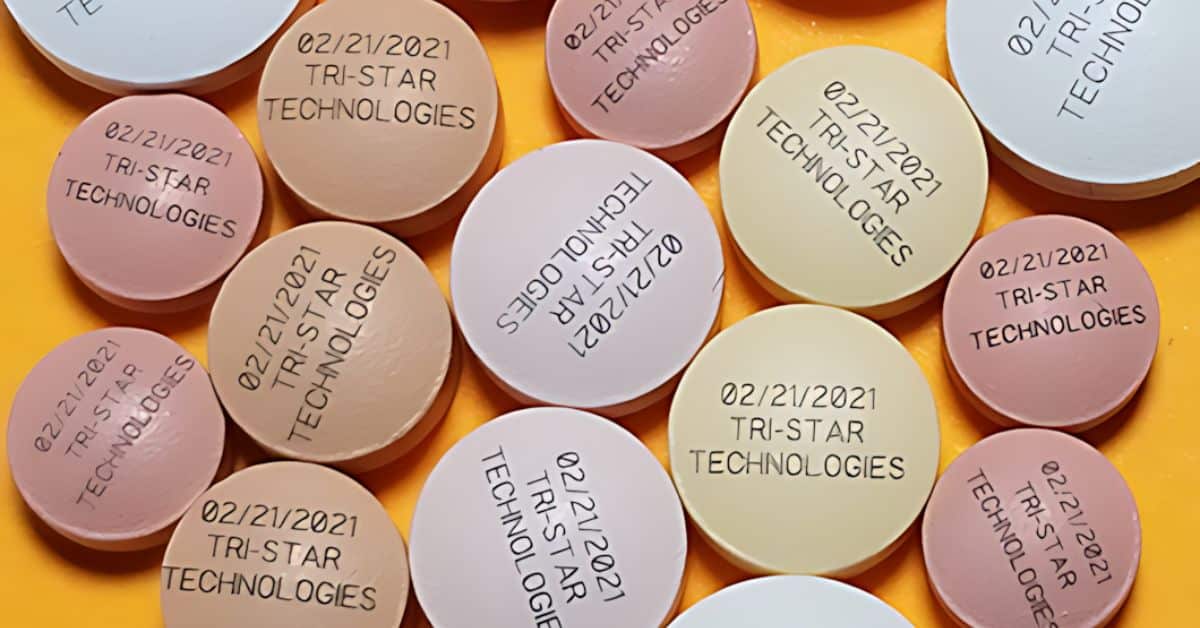
That cold laser positioning is one reason UV systems are so strongly associated with pharmaceutical work. When the goal is to apply a legible identifier, barcode, logo, or code to a coated tablet or capsule, UV gives manufacturers a way to prioritize readability and permanence while protecting the product surface and supporting sanitary, non-contact processing.
How Green Lasers Differ
Green lasers occupy a narrower but still important role, as green lasers are more sensitive than UV for certain highly sensitive materials. Green 532 nm systems are good fits for heat-sensitive materials and for applications requiring high readability with low distortion.
In pharmaceuticals, green lasers can be especially valuable when product color, coating chemistry, or contrast requirements make them a better optical match. Applications for green laser coding include gelatin-based pills across a range of colors, using the wavelength to achieve high-definition readable marks at production-relevant speeds. That does not mean green lasers should replace UV by default. It means green lasers can solve specific contrast problems that appear when product formulations or surface colors do not respond as well to UV.
This is where process fit matters more than theory. A manufacturer may have one product family that marks cleanly with UV and another that benefits from green because the visual result is stronger or more consistent. The laser choice should follow the substrate response, not a blanket assumption about which technology sounds more advanced.
The Biggest Differences Between Ultraviolet and Green Lasers
Now that we understand ultraviolet and green lasers better, what’s the difference? UV laser marking is compatible with solid tablets, soft gelatin capsules, and hard gelatin capsules—even with TiO2 additives. Green laser marking is compatible with clear marking plastic capsules.
Green laser marking is done with light that has a wavelength of 532 nm. This puts it between the UV laser and CO₂ laser marker. It is much gentler than CO₂, with less heat reliance and far more precision. However, the wavelength is not as short as the UV laser, so it has the potential to generate a bit more heat effect.
A UV laser is a laser marking machine that uses ultraviolet light with a 355 nm wavelength. The UV laser marking process is called “cold marking” because the shorter wavelength allows for higher absorption and can mark materials through photolytic degradation processing instead of relying on the thermal effect. The beam is also ⅓ the length of a standard wavelength, which generates a smaller beam spot for clearer marking on tiny pills.
What This Means for Pharmaceutical Manufacturers
For pharmaceutical teams, the comparison should focus on validation, product sensitivity, mark quality, and line requirements. If the goal is to mark tablets or capsules with permanent, legible codes in a safe and non-contact process, UV is usually the starting point because it aligns with the most established pharmaceutical use cases. It supports clear identification, works well in development and production settings, and fits products that cannot compromise structural integrity.
Green lasers deserve attention when a product presents a tougher contrast challenge or when substrate sensitivity points to 532 nm as the better technical match. In those cases, green can be the right answer. Still, many pharmaceutical operations do not need to start there. They need a system with strong application coverage, dependable readability, and a clear path from testing to production. For that reason, UV remains the more common benchmark in pharmaceutical marking discussions.
Choosing The Right System for the Application
The distinction between UV and green lasers is not just about color on a wavelength chart. It is about how each laser interacts with real pharmaceutical products under real production requirements. UV systems are closely tied to tablet and capsule marking because they provide high-resolution, permanent, non-contact marks on sensitive products. Green lasers bring value when special materials or color conditions demand a different optical approach.
For manufacturers evaluating laser marking equipment, the smartest approach is application-based testing. The ideal system is the one that produces the necessary contrast and readability on the actual product while supporting validation, throughput, and quality goals. In many pharmaceutical environments, that evaluation leads directly to UV. In narrower cases, green may prove to be the stronger fit. Either way, understanding the wavelength difference is what turns a broad technology comparison into a practical equipment decision.
Conclusion
UV and green lasers each bring unique advantages to pharmaceutical marking, but the right choice depends on the product, the substrate, and the performance requirements of the application. When manufacturers understand how each laser interacts with pharmaceutical products, they can make a more confident equipment decision.
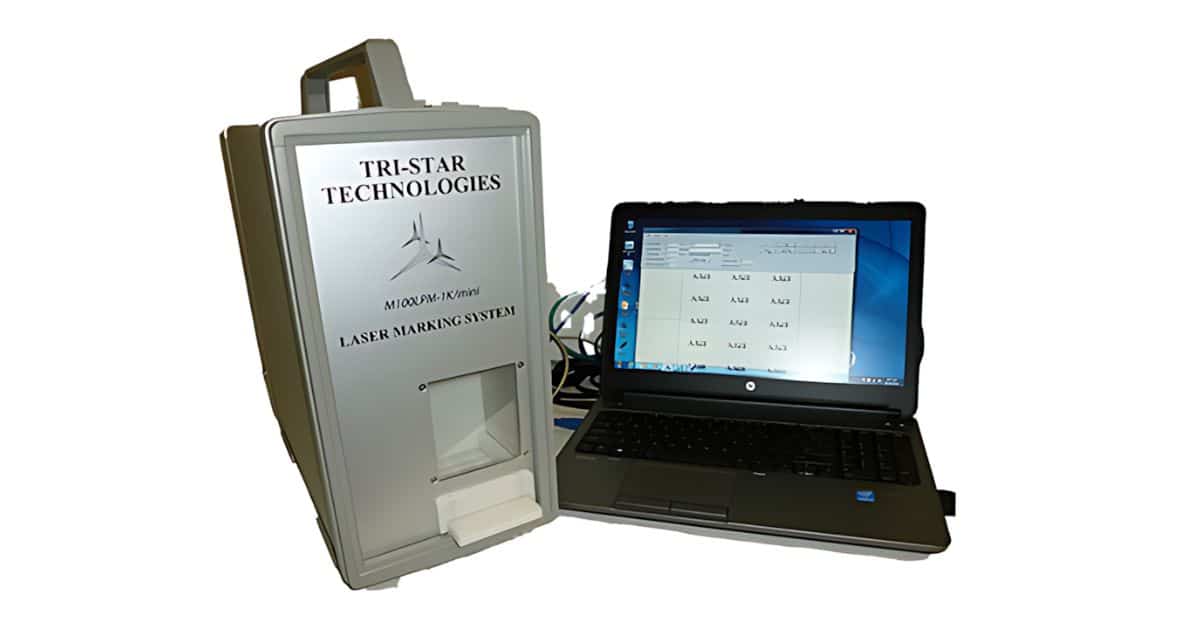
If your team is evaluating laser marking equipment for tablets, capsules, or other sensitive applications, Tri-Star Technologies can help you identify the right solution for your process. Contact Tri-Star to discuss your marking requirements and explore systems designed for safe, precise, and production-ready pharmaceutical marking.