




Traceability Risk in Inconsistent Wire Identification
Wire identification connects a physical conductor to the information that manufacturers, inspectors, installers, and maintenance teams need throughout its service life. A clear mark can communicate a circuit designation, part number, source, destination, or other production data. When that information remains accurate and legible, teams can trace the wire from initial processing through assembly, inspection, installation, and repair.
Inconsistent identification breaks that connection. Variations in message content, spacing, orientation, contrast, or placement can introduce uncertainty at several points in production. Traceability risk in inconsistent wire identification includes assembly errors, delayed inspections, incomplete records, and costly rework, particularly in aerospace, defense, transportation, and other regulated industries.
Why Consistent Identification Supports Traceability
Traceability depends on maintaining a reliable relationship between a component and its documented history. For a wire or cable, the printed identification serves as the visible link between the physical material and records such as work orders, bills of materials, inspection results, and installation diagrams.
A traceability system becomes less dependable when operators cannot read a mark or confirm that it matches the required production record. Even when the conductor functions correctly, uncertainty about its identity can prevent a technician from verifying its source, destination, material specification, or intended use.
Identification Must Remain Clear Across the Workflow
Wire may pass through dereeling, measuring, marking, cutting, stripping, crimping, bundling, testing, installation, and maintenance. Each stage can place different demands on the identification. Marks must remain visible after handling, and their placement must allow technicians to locate them after the wire enters a dense harness or enclosed assembly.
Consistency also matters between production runs. A manufacturer that changes character sizes, orientations, abbreviations, or spacing without controlled rules may create several acceptable-looking formats that communicate information differently. Those differences make visual verification harder and increase reliance on individual interpretation.
Where Identification Inconsistency Creates Risk
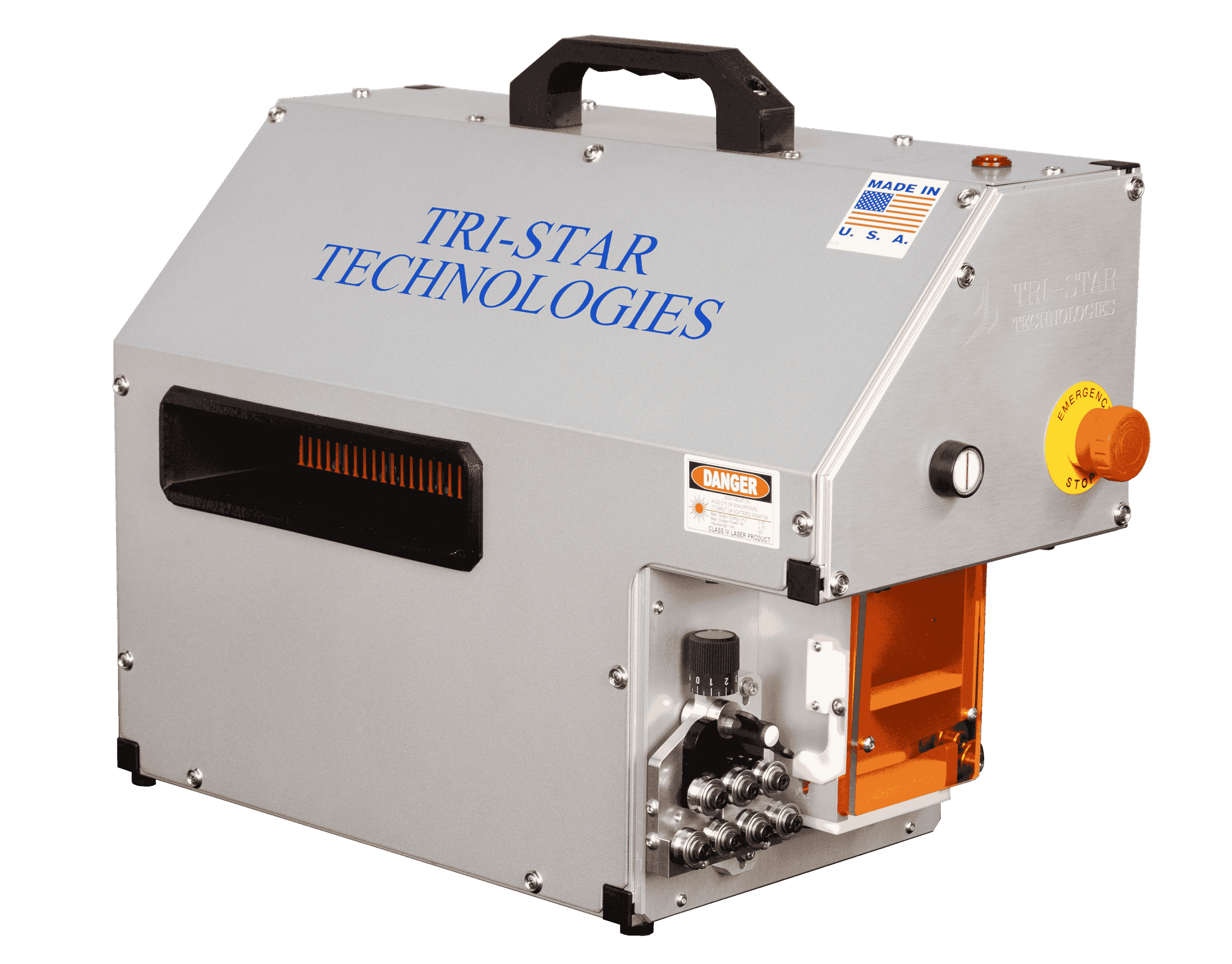
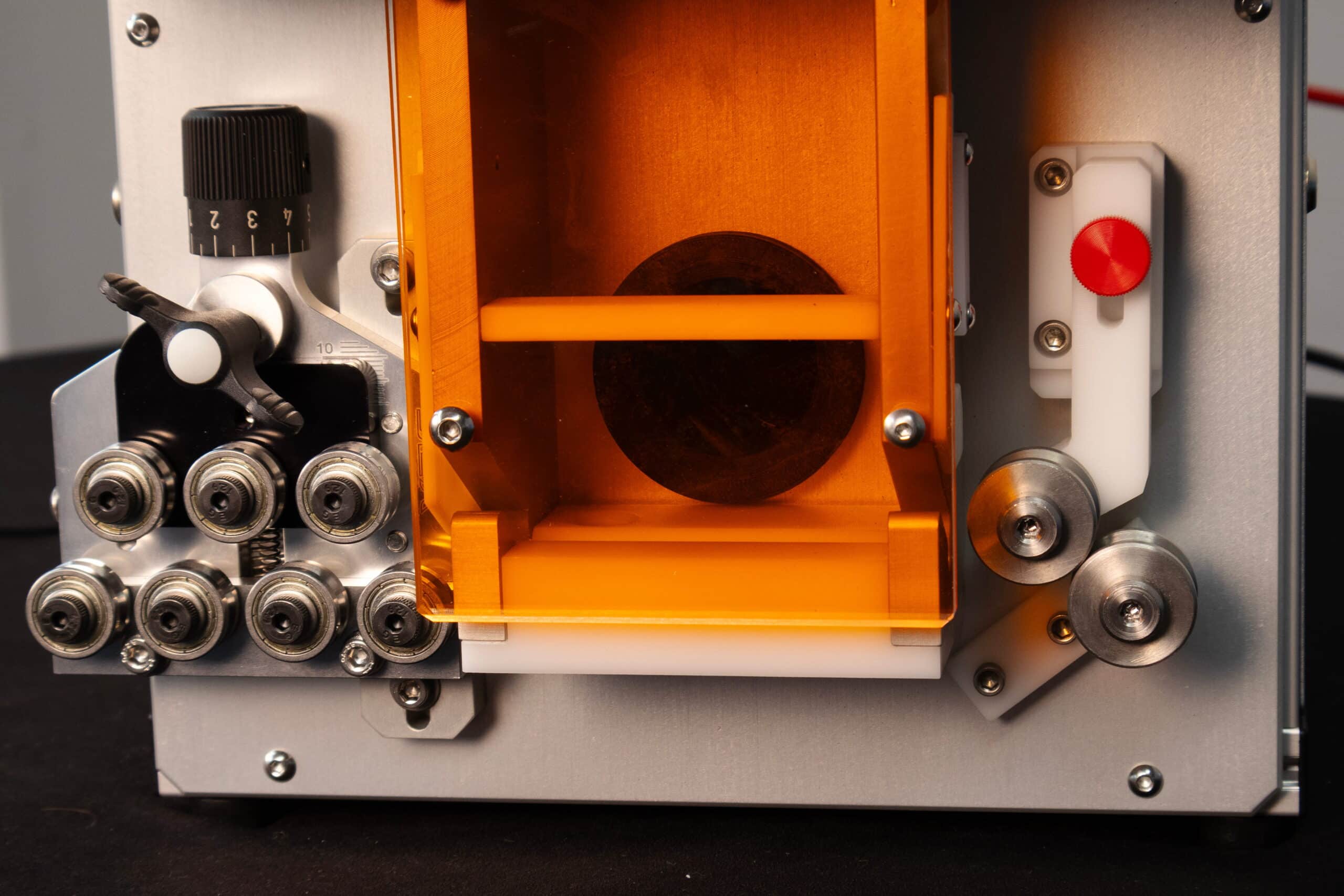
A laser wire marking machine can help standardize message content, character placement, and repeat spacing when manufacturers configure it around production data. However, the equipment alone does not establish traceability. Manufacturers must also control data entry, material selection, process settings, validation, and recordkeeping.
The greatest risks appear when marking operates as an isolated step rather than part of the broader wire-processing workflow. Manual transcription, disconnected job files, and inconsistent operating procedures create opportunities for the physical mark and the production record to diverge.
Incorrect Messages Can Follow Wires into Assembly
A mark may appear sharp and permanent while still containing the wrong information. An operator might select an outdated job, enter an incorrect circuit code, transpose characters, or load the wrong wire specification. If the error passes through initial inspection, it can follow the conductor into a completed harness.
This type of mistake creates more than a cosmetic defect. Assemblers may route the wire to the wrong termination point, inspectors may compare it against the wrong drawing reference, and maintenance personnel may misidentify it later. Correcting the problem may require removing the wire from a partially completed or fully installed assembly.
Poor Legibility Slows Verification
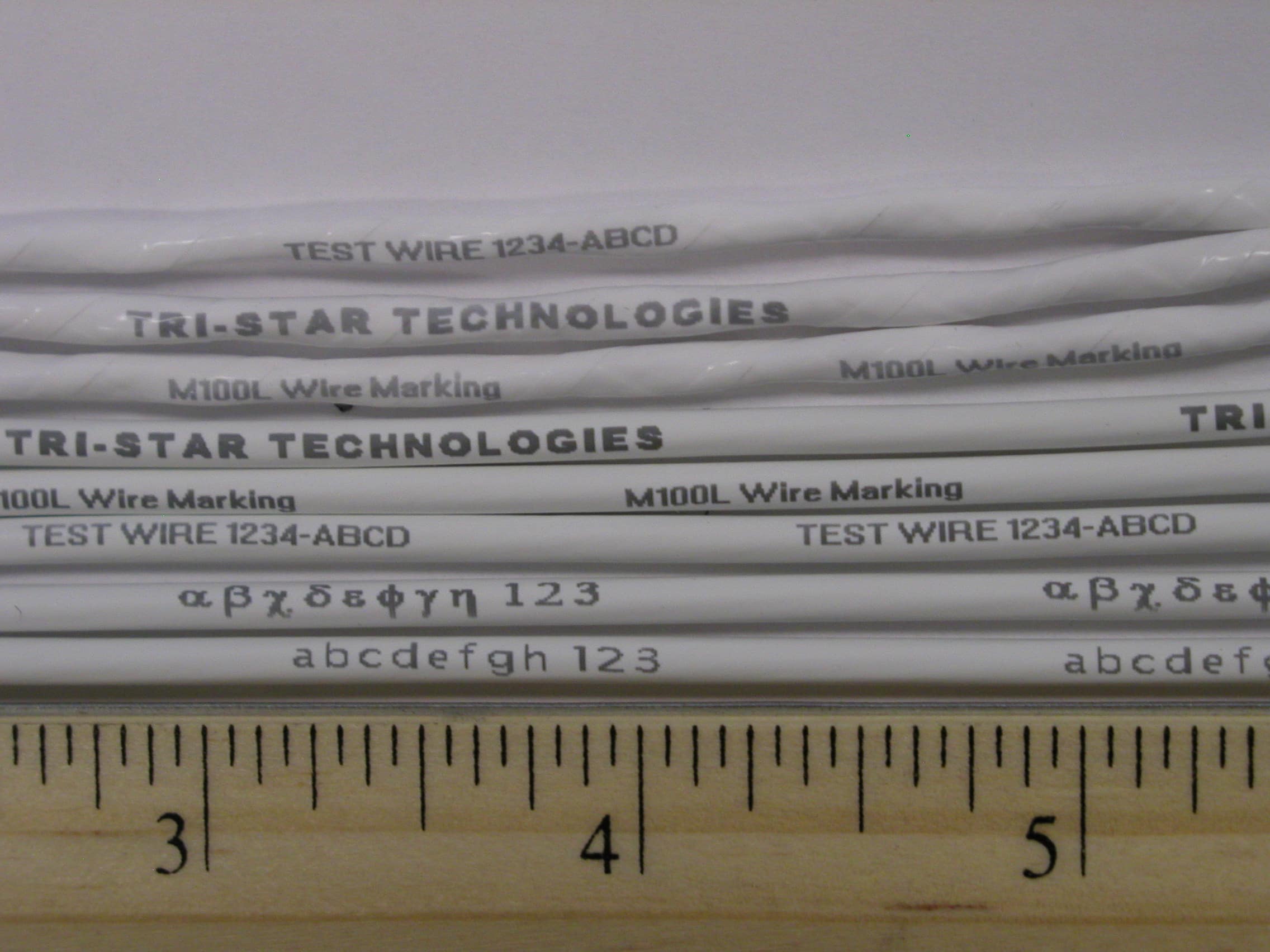
Another traceability risk in inconsistent wire identification is poor legibility and slow verification. Low contrast, undersized characters, uneven spacing, and incomplete marks can force personnel to stop and interpret what they see. Similar characters, such as zeros and the letter O, become more difficult to distinguish when print quality varies.
Legibility can also vary with insulation composition. UV marking response depends partly on the pigment within the wire jacket, and that character size, line spacing, and laser parameters affect the appearance of the mark.
Irregular Placement Creates Assembly Confusion
A readable message provides little value when technicians cannot find it. Inconsistent repeat intervals may leave identification hidden beneath clamps, connectors, coverings, or harness branches.
Controlled spacing helps preserve identification at the locations where teams need it. Tri-Star’s M100LFG-TT-METEOR, for example, supports integration into continuous production and rewind lines, with encoder-controlled marking at speeds up to 300 feet per minute.
How Inconsistent Marking Affects Production
Identification errors can move downstream before anyone recognizes them. The longer an error remains hidden, the more material, labor, and production time it can affect. A single incorrect message may require teams to quarantine a batch, review records, reinspect finished assemblies, or recreate work that already passed through several operations.
These disruptions also make production performance harder to evaluate. When workers must stop to resolve unreadable or conflicting marks, the time may appear as an assembly, testing, or inspection delay even though the problem began during wire preparation.
Rework Can Expand Beyond One Wire
Teams may need to replace one conductor when they detect an isolated marking defect early. A frequent error creates a larger problem. Every wire processed under the same job file or parameter set may require inspection, and manufacturers may need to determine exactly when the inconsistency began.
Without clear production records, the affected range can remain uncertain. Teams may quarantine more material than necessary because they cannot confidently separate acceptable wires from questionable ones.
Inspection Becomes Less Efficient
Inspectors need repeatable criteria for evaluating message accuracy, position, contrast, and legibility. If marking quality changes between operators or shifts, inspection becomes more subjective.
For aerospace applications, Tri-Star’s UV wire-marking solutions support standards like SAE ARP5607 and SAE AS5649. These standards reinforce the importance of qualified, legible wire identification rather than marks judged only by informal visual preference.
Reducing Risk Through Process Integration
Manufacturers can reduce traceability risks by connecting identification more closely with the rest of wire processing. Systems that combine marking with measuring, cutting, stripping, or coiling reduce the number of separate transfers and manual entries. Tri-Star’s wire-marking range includes configurations that perform several of these steps in a continuous sequence.
Integration does not eliminate the need for verification, but it can reduce transcription and handling errors. When approved job data controls several operations, the message, wire length, and downstream preparation steps can link to the same production instruction.
Match the System to the Production Environment
Different workflows create different traceability challenges. A facility that processes one wire type in long runs may prioritize production speed and repeatable mark spacing. A high-mix harness operation may need rapid job changes, multiple wire inputs, and strong controls against loading the wrong material.
Tri-Star’s M100LFGTTA-MULTIWIRE can process up to 16 wire or cable inputs on demand, which can help high-mix operations reduce manual spool changes. The M100LFG-TT-S integrates UV marking with compatible Schleuniger cut-and-strip equipment through CAYMAN software, linking identification more directly with wire preparation.
Maintaining Traceability After Marking
Traceability continues after a mark reaches the wire. Production records should show the job, the material, the time of processing, and the inspection confirmations. These records help teams investigate defects without relying on memory or incomplete handwritten notes.
Manufacturers should also protect settings from uncontrolled changes. Laser power, font size, message spacing, and other parameters affect results, but trained personnel should manage those settings within validated limits.
Build Traceability into Wire Processing
Unreliable wire identification creates problems that extend beyond the marking station. Incorrect, unreadable, or poorly placed messages can disrupt assembly, weaken inspection, complicate investigations, and increase rework.
Manufacturers can reduce exposure by controlling job data, qualifying wire materials, standardizing mark formats, validating production settings, and integrating identification with other wire-processing steps. To explore systems designed for stand-alone, multi-wire, mark-and-cut, or in-line applications, contact Tri-Star Technologies to discuss a wire-marking configuration for your production requirements.