




Alphanumeric Marking Optimization for Small-Gauge Wire
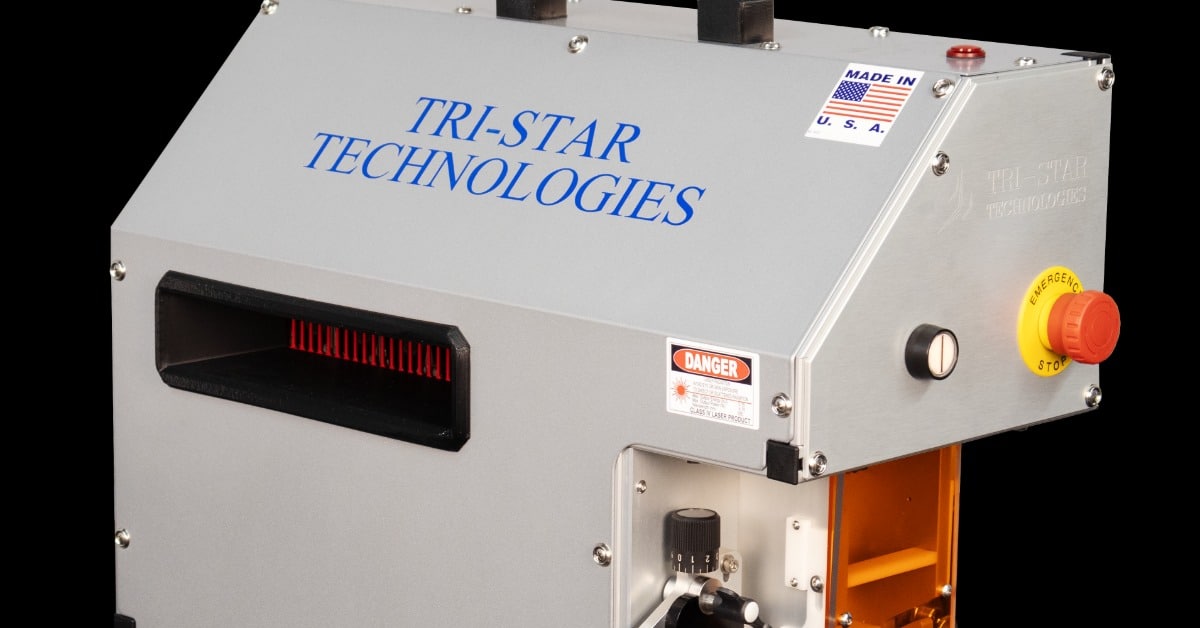
Small-gauge wire gives manufacturers very little surface area for identification. A mark that appears clear on a larger cable may become crowded, faint, or difficult to distinguish on a narrow conductor. That challenge becomes more significant in aerospace, defense, transportation, and harness manufacturing, where operators must distinguish individual wires within dense assemblies.
Optimizing alphanumeric marking for small-gauge wire requires more than reducing the size of a standard marking format. Character dimensions, orientation, contrast, spacing, wire presentation, and marking density all influence the finished result.
Why Small-Gauge Wire Requires Greater Marking Precision
As wire diameter decreases, the available marking area shrinks while identification requirements remain consistently demanding. Part numbers, circuit identifiers, and other alphanumeric information still need enough definition for operators to interpret them accurately.
Smaller characters also leave less room for imperfections. Gaps that seem insignificant on a larger character can make a letter or number harder to distinguish at reduced sizes.
Small Surface Area Changes Mark Design
Trying to place too much information in a restricted space can reduce legibility. Instead of treating every wire diameter the same, manufacturers should configure marking parameters around the physical dimensions of the wire and the identification requirements of the application.
Orientation can make a substantial difference. Printing characters along the length of the wire may provide room for larger characters than printing across its diameter, giving manufacturers another way to improve readability without changing the required identification.
Balance Character Size With Available Space
Larger characters generally provide better legibility, especially when the wire insulation produces little contrast under UV exposure. However, simply maximizing character size does not solve every problem. The entire identifier must still fit within the available marking area at the required repeat interval.
A properly configured wire marking machine should give manufacturers control over character size, orientation, spacing, and related print parameters. Those adjustments make it possible to develop a marking format around the wire instead of forcing one configuration across every gauge.
Select Fonts for Clarity at Small Sizes
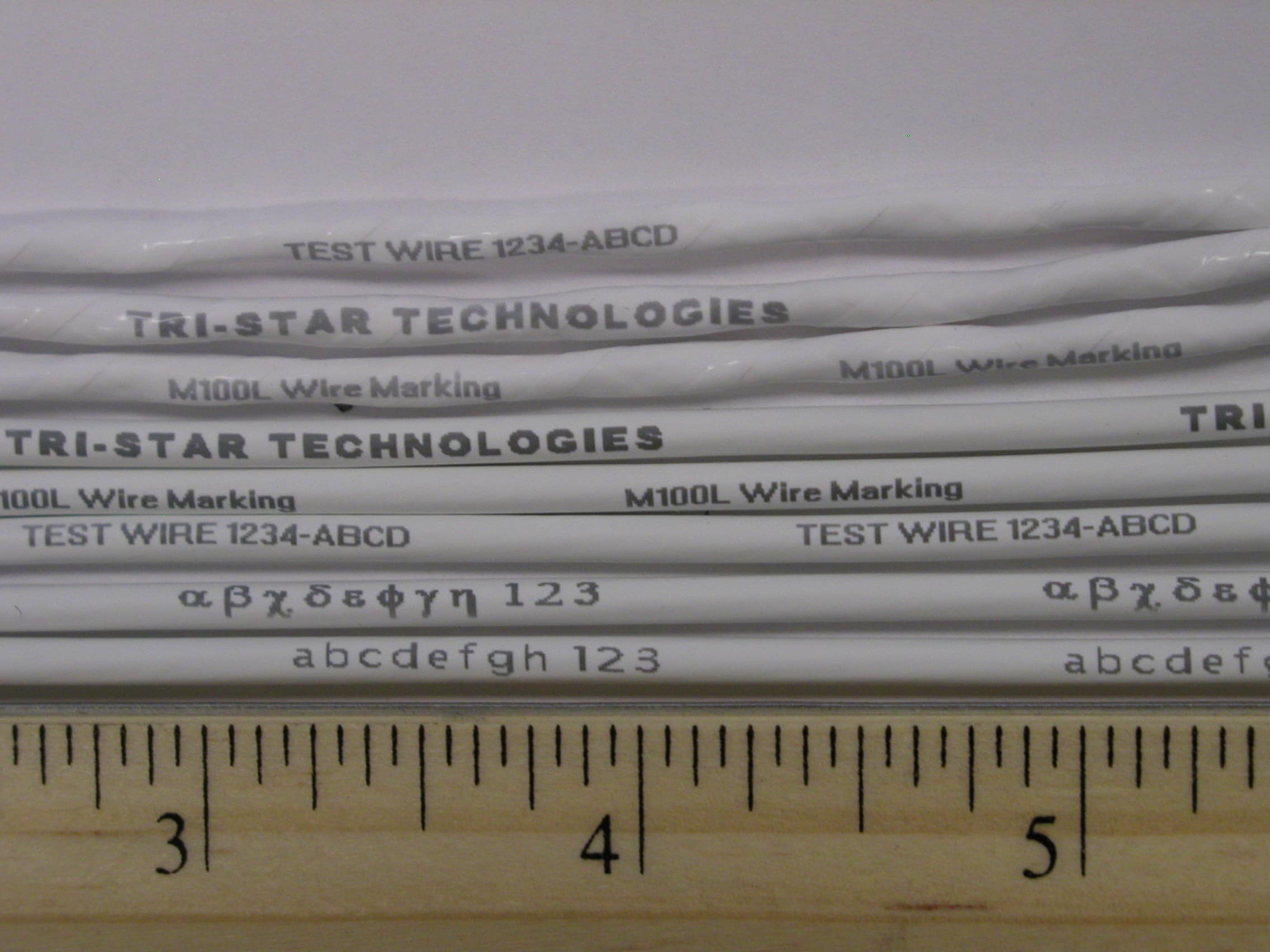
Font design becomes increasingly important as character dimensions decrease. Complex letterforms or unnecessary detail can make small characters harder to read, while simpler forms can preserve distinction between letters and numbers.
Manufacturers should evaluate the complete character set they expect to use rather than testing only a few easy-to-read examples.
Optimize Mark Density Without Sacrificing Throughput
During UV laser marking, the system places a series of small marking points close together to form each letter and number. Tighter and more precise spacing helps the system create clearer and more distinct characters.
If spacing becomes too wide, visible gaps may weaken the shape of the character. Excessive overlap can also create inefficient processing. The best configuration places marking points close enough to create a clear form without using unnecessary marking time.
Tri-Star’s M100LFG-TT-METEOR, for example, uses two-dimensional scanning technology with programmable dot spacing and supports print densities up to 600 dpi.
Consider Filled Characters Versus Contours
Character construction also affects clarity. A contour-only mark requires less processing than a filled character, but the lighter appearance may provide insufficient readability on some insulation materials.
Adding properly spaced marking points within the character can create a darker, more defined result. Manufacturers should balance that improvement against production speed because denser marking requires additional processing.
The best setting depends on the material and application rather than a universal density value.
Account for Insulation and Marking Contrast
Character geometry cannot compensate completely for poor contrast. Wire insulation formulation plays a significant role in UV laser marking performance, and different wire constructions can produce noticeably different results.
For UV-markable insulation containing titanium dioxide, exposure creates the contrast that forms the visible mark. The concentration of the pigment and characteristics of the insulation influence how dark that identification appears.
When contrast is lower, increasing character size or making characters bolder can improve legibility. This reinforces why manufacturers should optimize the entire marking process rather than focusing on a single variable such as laser power or font size.
Test the Wire Construction
Settings for one wire type should not automatically transfer to another. Differences in insulation material, color, pigment concentration, and diameter can affect the appearance of the mark.
Production teams should evaluate representative wire samples before establishing settings for a job. Testing allows them to determine whether adjustments to character dimensions, orientation, or print density produce a meaningful improvement.
Maintain Consistent Wire Positioning
Even optimized characters can lose clarity if the wire does not remain properly positioned during marking. Small-diameter conductors leave little margin for movement because a relatively minor shift represents a larger portion of the wire’s available surface.
Stable presentation becomes particularly important in reel-to-reel and continuous processing applications. Tension variations or inconsistent wire movement can affect mark placement and repeat spacing.
Non-contact UV laser marking helps avoid physical interaction with the conductor during the marking process. This preserves tension stability and insulation geometry, which is valuable when processing fine-gauge wire.

Synchronize Marking With Line Movement
Continuous processes introduce another challenge: production speed may change during ramp-up, normal operation, or downstream adjustments. If marking does not synchronize with wire movement, repeat intervals can become inconsistent.
Encoder-based synchronization provides a way to coordinate marking with actual line speed. Tri-Star’s M100LFGTTA-METEOR uses this approach to maintain mark placement as production speed changes.
Design Alphanumeric Formats for Real-World Use
Alphanumeric marking optimization for small-gauge wire should consider how people will use the finished mark, not just how it looks immediately after production. Operators may need to read identifiers during cutting, stripping, harness assembly, inspection, maintenance, or later verification.
Marks should therefore remain distinguishable under realistic handling conditions. Clear spacing between characters, consistent orientation, sufficient contrast, and appropriate repeat intervals can make identification faster and reduce uncertainty during downstream work.
Build Repeatability Into the Marking Process
Once manufacturers establish an effective configuration, repeatability becomes just as important as initial optimization. Recreating parameters manually for every production run can introduce avoidable variation.
Programmable systems allow operators to store job information such as marking messages, font parameters, character dimensions, and print density. Tri-Star’s UV laser systems use software-controlled marking parameters that can support repeatable production across both large batches and individual harness jobs.
Consistent settings also make process validation easier. Manufacturers can establish approved configurations for specific wire constructions, then recall those settings when the same material returns to production.
Improve Small-Gauge Wire Marks Through Controlled Optimization
Optimal marking on small wires depends on the interaction of several variables. Character size must suit the available surface, mark density must provide sufficient definition, and the insulation must create adequate contrast. Stable wire handling and synchronized production also support consistent results.
Manufacturers that evaluate these factors together can create identification that remains readable without unnecessarily slowing production. Programmable UV laser systems also provide the flexibility needed to adjust marking parameters as wire constructions and production requirements change.
Tri-Star Technologies develops UV laser marking solutions for fine-gauge wire, reel-to-reel production, harness processing, and continuous manufacturing applications. Contact Tri-Star Technologies to discuss your wire identification requirements and determine which marking configuration fits your production process.