




What Materials Benefits Most From Plasma Surface Treatment
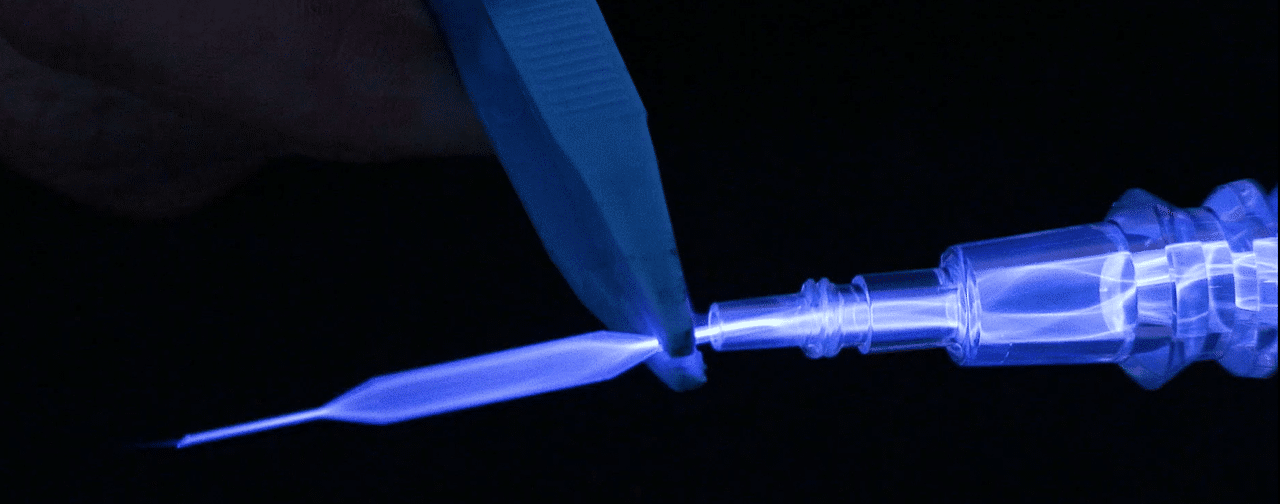
Manufacturers rely on adhesives, inks, coatings, paints, and potting compounds to perform critical functions. Yet these materials cannot create a reliable bond when the underlying surface resists wetting or contains contaminants that interfere with adhesion. Even a carefully selected adhesive may fail when the substrate does not provide suitable surface conditions.
Plasma surface treatment prepares a material for the next production step by modifying a very thin surface layer. The process can increase surface energy, improve wettability, remove certain contaminants, and create functional sites that support stronger adhesion. Below, we take a closer look at what materials most benefit from plasma surface treatment.
Why Material Surface Energy Matters
Surface energy affects how a liquid behaves after it reaches a substrate. On a high-energy surface, an adhesive, ink, or coating spreads more evenly and creates greater contact with the material. On a low-energy surface, that same liquid may bead, pull away, or leave areas with inadequate coverage.
Insufficient wetting can contribute to weak bonds, inconsistent printing, uneven coatings, and premature delamination. Plasma treatment increases the surface energy of compatible materials without requiring a wet chemical bath. Tri-Star Technologies’ atmospheric systems operate in ambient conditions and can integrate with production processes that involve bonding, painting, coating, printing, or potting.
Low-Surface-Energy Polymers Gain the Greatest Improvement
Low-surface-energy plastics are materials that most benefit from plasma surface treatment because their molecular structures make it difficult to bond, coat, or print without preparation. These materials provide useful chemical resistance, electrical performance, and durability, but those same characteristics can prevent adhesives and coatings from spreading across their surfaces.
Plasma introduces controlled physical and chemical changes at the outermost surface. It does not need to change the material’s bulk properties to improve wettability. The treatment affects only a thin surface region, allowing manufacturers to prepare the substrate while retaining the properties that made the polymer suitable for the application.
PTFE and Other Fluoropolymers
Polytetrafluoroethylene (PTFE) offers excellent chemical resistance, temperature stability, and electrical insulation. It also has very low surface energy, which makes untreated PTFE difficult to bond with adhesives, epoxies, inks, and coatings.
Plasma treatment equipment can increase the wettability of PTFE surfaces and improve their ability to interact with other materials. Manufacturers may use this preparation before bonding insulated wires, applying identification, adding coatings, or assembling components that contain fluoropolymer surfaces.
ETFE and FEP
Ethylene tetrafluoroethylene (ETFE) and fluorinated ethylene propylene (FEP) share several performance advantages with PTFE. Manufacturers use them in wire insulation, aerospace components, chemical-processing equipment, and other applications that require thermal stability and resistance to harsh environments.
Their surfaces can present many of the same adhesion challenges as other fluoropolymers. Controlled plasma exposure can prepare ETFE and FEP for bonding, coating, printing, or potting while preserving the functional characteristics of the underlying insulation or component.
Polyethylene and Polypropylene
Polyethylene (PE) and polypropylene (PP) appear in tubing, packaging, molded parts, medical products, automotive components, and industrial assemblies. Their low cost, chemical resistance, and flexibility make them practical manufacturing materials, but their low surface energy can interfere with adhesive performance.
Plasma activation helps liquids spread across PE and PP surfaces instead of forming droplets or withdrawing from the intended bond area. This improvement can support more uniform printing, better coating coverage, and stronger adhesive contact.
Wire and Cable Insulation Requires Controlled Treatment
Wire and cable manufacturers work with insulation materials that must provide electrical protection while accepting inks, adhesives, sealants, or potting compounds. Materials such as PTFE, ETFE, polyvinyl chloride (PVC), PE, PP, and polyethylene terephthalate (PET) can respond differently to a bonding process, so teams must qualify treatment settings for each construction.
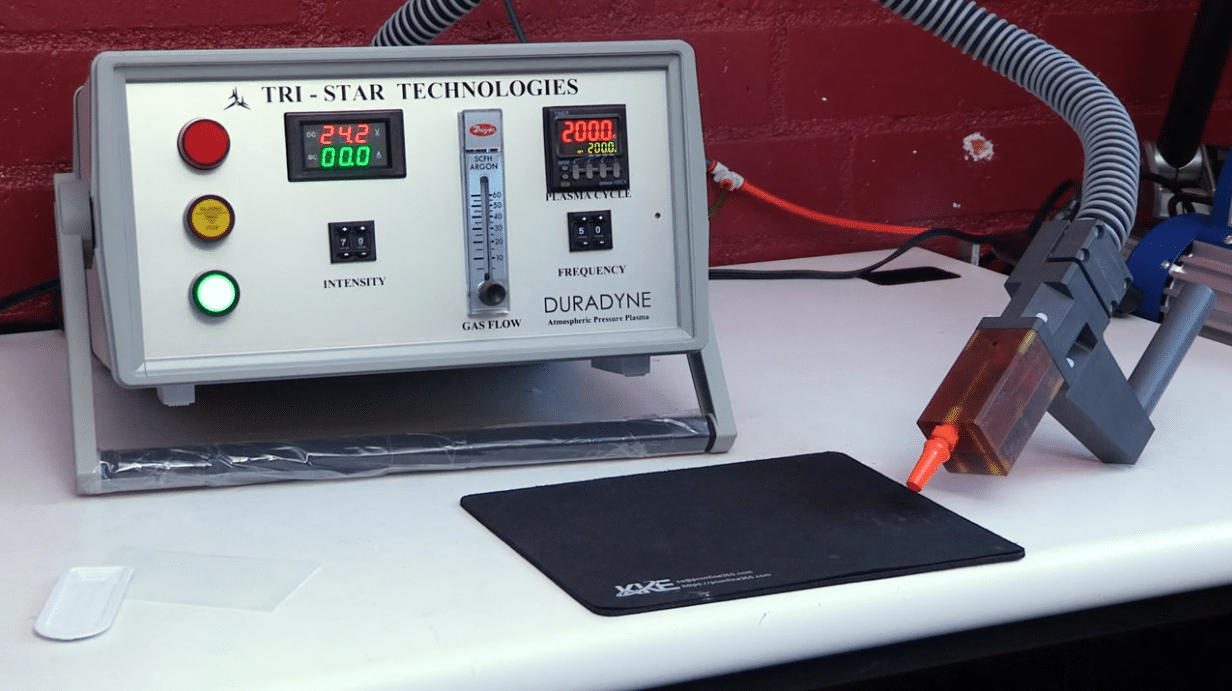
Tri-Star Technologies’ PT-1000 treats continuously moving wire and cable at atmospheric pressure. Interchangeable electrodes accommodate different gauges, while split-electrode configurations can support extrusion lines where the material has no free end. The system can prepare a complete circumference for subsequent printing, coating, gluing, or potting.
Thin or Sensitive Insulation
Fine-gauge wires and cables with thin insulation require precise control because excessive energy or exposure could compromise the surface. A suitable system must balance plasma intensity, electrode configuration, line speed, and exposure time.
Reverse-electrode configurations can support bare conductors or wires with thin, partially conductive, or sensitive insulation. Manufacturers should establish validated parameters for each wire type rather than applying one setting across every material and diameter.
PVC and PET Can Benefit from Better Wettability
PVC has higher surface energy than fluoropolymers, but additives, processing residues, and formulation differences can still create inconsistent adhesion. Plasma treatment can clean and activate the surface before manufacturers apply inks, coatings, or adhesives.
PET can also benefit when a process requires stronger wetting or more uniform coverage. Manufacturers use PET in films, housings, electrical components, medical products, and industrial parts.
Silicone Components Present Distinct Bonding Challenges
Silicone materials provide flexibility, temperature resistance, and biocompatibility for many medical and industrial products. Their surfaces can resist bonding, however, particularly when low-molecular-weight compounds or processing residues interfere with adhesive contact.
Plasma treatment can increase surface energy and prepare silicone tubing, seals, molded parts, and related components for bonding or coating. Process engineers should account for the possibility that an activated surface may lose some of its improved wettability over time, making prompt downstream processing important.
Composites, Glass, and Ceramics May Need Surface Activation
Composite materials combine fibers, resins, fillers, and coatings that can create different surface conditions across a single part. Plasma can remove light organic contamination and improve wettability before painting, bonding, sealing, or applying another functional layer.
Glass, quartz, and certain ceramic materials may also benefit from surface cleaning and activation. These substrates already possess different surface characteristics than fluoropolymers, but contamination or manufacturing residues can still prevent reliable adhesion.
Metals Benefit Primarily From Surface Cleaning
Metals generally have higher surface energy than most plastics, so they do not require treatment for the same reasons as PTFE or PP. Oils, oxides, fingerprints, release agents, and other contaminants can still prevent an adhesive or coating from contacting the actual metal surface.
Atmospheric plasma can support surface cleaning before bonding, painting, sealing, or coating compatible metal components. The process must match the alloy, surface finish, contaminant type, and downstream material.
Medical Devices Demand Clean, Controlled Preparation
Medical device manufacturers work with polymers, metals, glass, silicone, and composite assemblies that may require adhesive bonding, printing, coating, or fluid control. Catheters, syringes, needles, connectors, and other products can contain surfaces that resist wetting or demand consistent preparation.
Tri-Star’s PT-2000 series supports manufacturing applications that require greater wettability or better adhesion. Atmospheric treatment can reduce reliance on certain solvent-based preparation steps while supporting controlled, repeatable processing. Manufacturers must still validate the complete process against their quality system, material requirements, and applicable regulations.
Match Plasma Treatment to the Material and Process
Low-surface-energy polymers such as PTFE, ETFE, FEP, PE, and PP typically show the clearest improvement after plasma surface treatment. PVC, PET, silicone, wire insulation, composites, glass, ceramics, and contaminated metal surfaces can also benefit when manufacturers need better wettability, adhesion, printing, coating, or potting performance.
If you require a plasma treatment system, or want to learn more about its effect on substrates, contact Tri-Star Technologies to discuss your material, application, and production environment and identify a system that suits your manufacturing process.