




Why Traceability Is So Important in the Electronics Industry
In the complex world of electronics manufacturing, traceability is the ability to track every component and product throughout its entire lifecycle. This process begins at the source of raw materials and continues through production, assembly, distribution, and even to the end-user. Traceability is incredibly important in the electronics industry, and in this guide below, we’ll explain why.
The Core Benefits of Traceability
A comprehensive traceability system offers numerous advantages that extend across all business functions. It is the backbone of modern electronics manufacturing, providing critical support for quality, safety, and efficiency.
Improved Quality Control
Traceability allows manufacturers to monitor components at every stage of the production process. By tracking each part, companies can quickly identify the source of any defects or inconsistencies. This immediate identification prevents faulty products from reaching the market and helps isolate issues to specific batches, minimizing waste and production downtime. A strong quality control process, with traceability support, builds brand reputation and customer trust.
Safety
In high-stakes sectors like aerospace, automotive, and medical devices, product failure is not an option. Traceability confirms that every component meets stringent safety standards. Should a safety concern arise, manufacturers can pinpoint the compromised products and take swift corrective action. This capability is crucial for preventing accidents and protecting lives.
Efficient Recall Management
Product recalls are an unfortunate reality for any manufacturer. An effective traceability system makes this process manageable and targeted. Instead of issuing broad, costly recalls, companies can identify and retrieve only the specific units that require a recall. This precision saves money, preserves brand reputation, and demonstrates a commitment to customer safety.
Compliance with Regulations
A web of national and international regulations governs the electronics industry. Traceability provides the accurate documentation necessary to prove compliance with these standards. For instance, companies must show the origin of materials and confirm that products are free from conflict minerals. A robust traceability system simplifies this reporting and helps companies avoid legal penalties and trade restrictions.
Supply Chain Optimization
Another reason why traceability is so important in the electronics industry is that it offers a clear view of the entire supply chain, from raw material suppliers to end customers. This visibility allows for better inventory management, demand forecasting, and logistics planning. By understanding the flow of materials and products, manufacturers can identify bottlenecks, reduce lead times, and optimize their operations for greater efficiency and profitability.
Methods for Achieving Traceability
To achieve effective traceability, manufacturers employ various marking technologies. The most common methods the industry utilizes for traceability include barcode marking, RFID technology, and UV laser marking.
Barcode and QR Code Marking
Some electronics manufacturers favor barcodes and QR codes due to their simplicity and low cost. These optical codes can store essential information like serial numbers, batch codes, and manufacturing dates. While effective for many applications, their reliance on physical labels is a limitation, as conditions can damage, detach, or even make these labels unreadable over time.
RFID Technology
Radio-Frequency Identification (RFID) is a technology that manufacturers use to store information on a tag that attaches to an object and then use radio waves to capture and read this information. Technicians can read RFID tags from a distance and do not require a direct line of sight, which makes them efficient for tracking large volumes of items in a warehouse or during transit. However, the cost of RFID tags and infrastructure is substantial in comparison to other methods.
UV Laser Marking: The Superior Solution
For the demanding environment of electronics manufacturing, UV laser marking is a premier solution. This advanced method uses an ultraviolet laser to create a permanent, non-destructive mark directly on the surface of a component. The process involves a photochemical reaction, often with an additive like titanium dioxide (TiO2) in the material, which changes color under exposure to UV light. This creates a high-contrast, indelible mark without damaging the underlying material, a critical requirement for delicate electronic components.
A Closer Look at UV Laser Marking
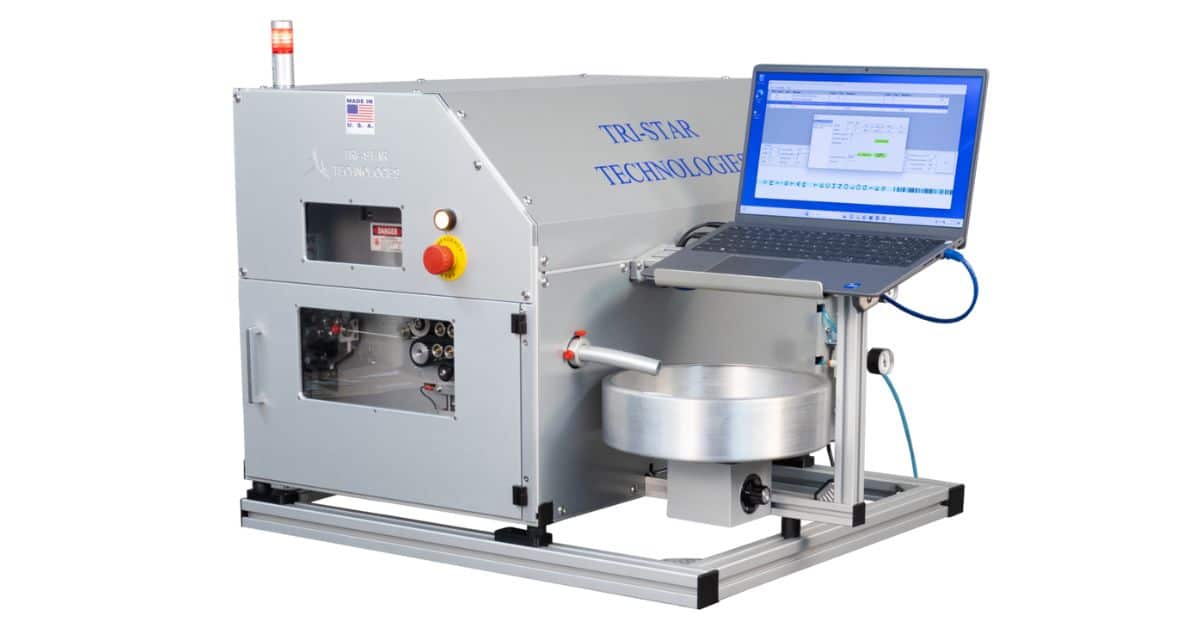
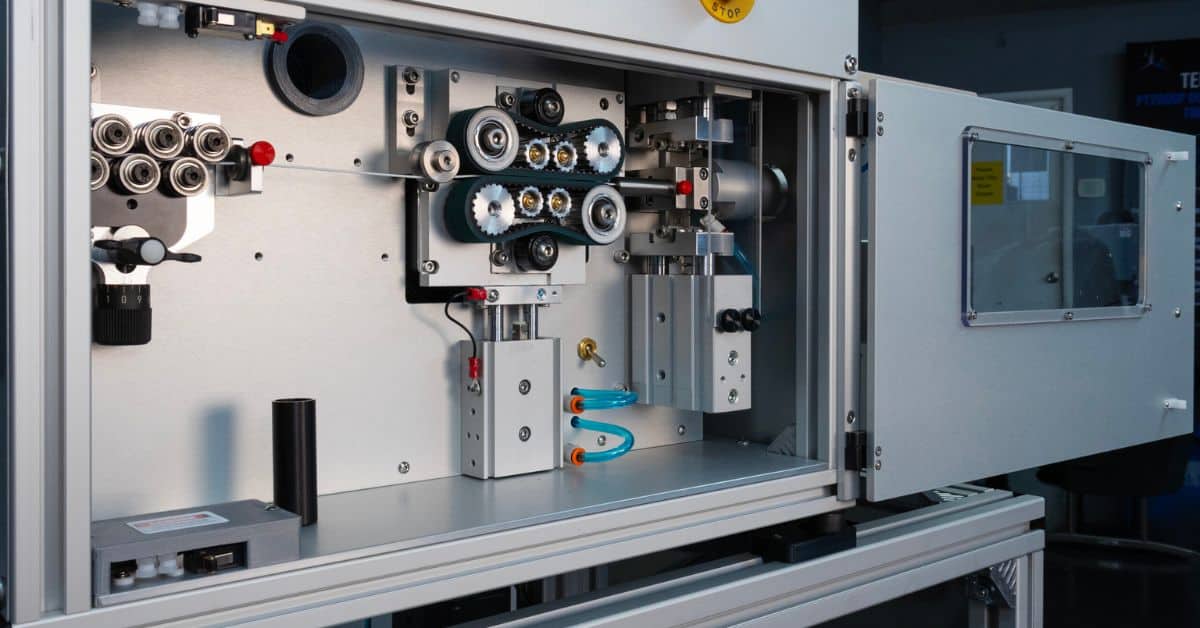
UV laser marking stands out due to its precision, durability, and versatility, making it the preferred choice for industries where failure is not an option. Let’s take a closer look at laser wire marking machines and how they work for traceability.
How UV Laser Marking Works
The technology uses a beam of UV light to alter the surface of a material. Unlike other laser types that use heat to engrave or ablate the material, UV lasers operate on a “cold marking” principle. This photochemical process breaks molecular bonds on the surface, creating a clear mark without thermal stress or physical damage. The result is a smooth, permanent identifier that becomes part of the material itself.
Key Advantages of UV Laser Marking
The benefits of UV laser marking technology for traceability and the electronics industry are significant. Its precision allows for the marking of extremely small components, like microchips and circuit boards, with high-resolution characters and codes. The marks are exceptionally durable, resistant to abrasion, chemicals, and extreme temperatures, verifying that they remain legible throughout the product’s lifespan. Most importantly, the non-destructive nature of the process preserves the integrity of sensitive electronic parts.
Material Compatibility and Industry Standards
UV laser marking is compatible with a wide range of materials common in the electronics industry, including plastics, ceramics, metals, and silicon. Even sectors with the most rigorous standards have adopted the technology due to its effectiveness. For example, Tri-Star Technologies’ systems comply with standards like the Boeing BAC5152 standards and other critical aerospace and military specifications like AS50881.
Challenges and Future Directions
While the benefits are clear, implementing a traceability system presents challenges. The initial cost of equipment and software, integration with existing manufacturing systems, and the management of vast amounts of data require careful planning. However, the long-term returns on investment in quality, safety, and efficiency far outweigh these initial hurdles.
Looking ahead, further technological advances will shape the future of traceability. We can expect to see more sophisticated marking technologies integrated with the Internet of Things (IoT) and cloud-based platforms. This will enable real-time tracking and data analysis on a global scale. Artificial intelligence and machine learning will play a growing role, analyzing traceability data to predict failures, optimize supply chains, and drive continuous improvement.
Secure Your Operations with Advanced Traceability
Traceability is an indispensable pillar of the modern electronics industry. It supports quality, enhances safety, and drives operational efficiency across the supply chain. As manufacturing processes grow more complex and globalized, the need for precise and reliable tracking systems only intensifies. Advanced methods like UV laser marking provide the robust solution required to meet these demands.
Tri-Star Technologies stands at the forefront of this field, providing cutting-edge traceability solutions that empower manufacturers to meet the highest standards of quality and compliance. With over 550 wire and cable marking systems deployed worldwide, leaders in aerospace, automotive, and medical device manufacturing trust our technology. Explore our range of UV laser marking solutions and discover how you can bring unparalleled precision and reliability to your operations.