




Laser vs. Traditional Marking Methods: What’s Better?
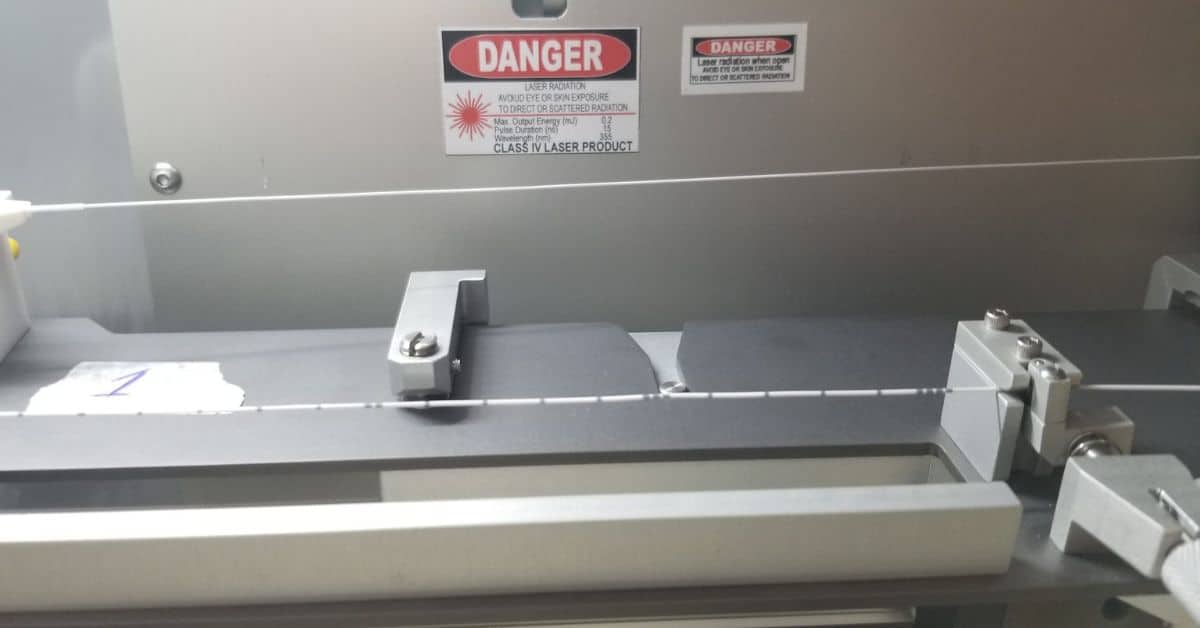
Manufacturing companies face a crucial choice between laser marking and traditional methods, as this decision impacts production costs, product durability, and compliance with industry regulations. While manufacturers have been using traditional methods for decades, laser technology offers advantages in traceability, durability, and meeting strict regulatory standards. In our comparison below, we’ll look closer at laser vs. traditional marking methods to help you decide which is better for your application.
Traditional Marking Methods
Traditional marking encompasses several techniques that manufacturers have relied upon for generations. These methods continue to serve specific applications where their characteristics align with production requirements.
Inkjet Printing Technology
Inkjet printing remains popular for high-volume production runs where speed matters more than permanence. This method applies liquid ink through tiny nozzles onto surfaces, creating visible marks that work well for temporary identification or date coding. Food packaging, shipping labels, and batch identification represent common inkjet applications.
The technology excels in situations requiring the rapid application of variable information. Production lines running thousands of units per hour benefit from inkjet’s ability to change text, numbers, or simple graphics without stopping the manufacturing process.
Mechanical Engraving Systems
Mechanical engraving uses cutting tools or diamond-tipped styluses to physically remove material from surfaces. This subtractive process creates permanent marks by carving grooves into metal, plastic, or composite materials. Jewelry engraving, industrial nameplates, and trophy personalization showcase mechanical engraving’s capabilities.
The physical nature of mechanical engraving produces tactile marks that remain readable even when paint, dirt, or other substances covers them. This characteristic makes mechanical methods valuable for harsh industrial environments where marks must survive extreme conditions.
Pad Printing Operations
Pad printing transfers ink from an etched plate to products using a flexible silicone pad. This indirect printing method handles complex three-dimensional shapes that other traditional methods cannot accommodate. Electronics manufacturers use pad printing for component labeling, while medical device companies apply it to curved surfaces like syringes or surgical instruments.
Disadvantages of Traditional Methods
Despite their popularity and benefits, traditional marking methods face significant limitations that affect their suitability for modern manufacturing requirements. Durability, precision, and maintenance costs are all drawbacks that manufacturers must consider when choosing a marking method.
Durability and Permanence
Durability concerns top the list of traditional method weaknesses. Inkjet marks can fade, smudge, or wear away with handling, environmental exposure, or cleaning procedures. Critical applications requiring permanent identification, therefore, cannot rely on inkjet technology alone. Similarly, mechanical engraving, while permanent, creates stress points in materials that may compromise their structural integrity over time.
Precision and Detail
Precision limitations hamper traditional methods, making them mostly suitable only for relatively simple designs and larger text sizes. Fine details, complex graphics, or microscopic markings typically exceed the capabilities of most traditional systems. This becomes problematic for applications requiring dense information, such as QR codes, or high aesthetic appeal.
Maintenance and Operational Costs
The ongoing maintenance requirements of traditional systems can increase operational costs and reduce uptime. Inkjet systems, for instance, require regular cleaning, ink replacement, and nozzle maintenance. Mechanical systems require tool replacement, calibration, and precision adjustments, all of which consume valuable production time and resources.
Laser Marking Methods
Now that we know more about traditional marking methods, we’ll examine laser marking technology to see what’s better. Laser marking technology uses light beams to alter material surfaces through heating or chemical reactions.
CO2 Laser Marking Technology
CO2 lasers emit infrared light at 10.6 micrometers, providing excellent absorption characteristics for organic materials like wood, paper, leather, and many plastics. The longer wavelength penetrates deeper into materials, enabling both surface marking and through-cutting operations.
Packaging industries use CO2 lasers for date coding, lot marking, and decorative applications. The technology handles flexible materials that would challenge other marking methods while maintaining high speed and precision.
UV Laser Marking Capabilities
UV laser marking operates at 355 nanometers, delivering photochemical processing that creates marks through molecular bond breaking rather than thermal effects. This “cold” processing minimizes heat-affected zones and enables marking of temperature-sensitive materials.
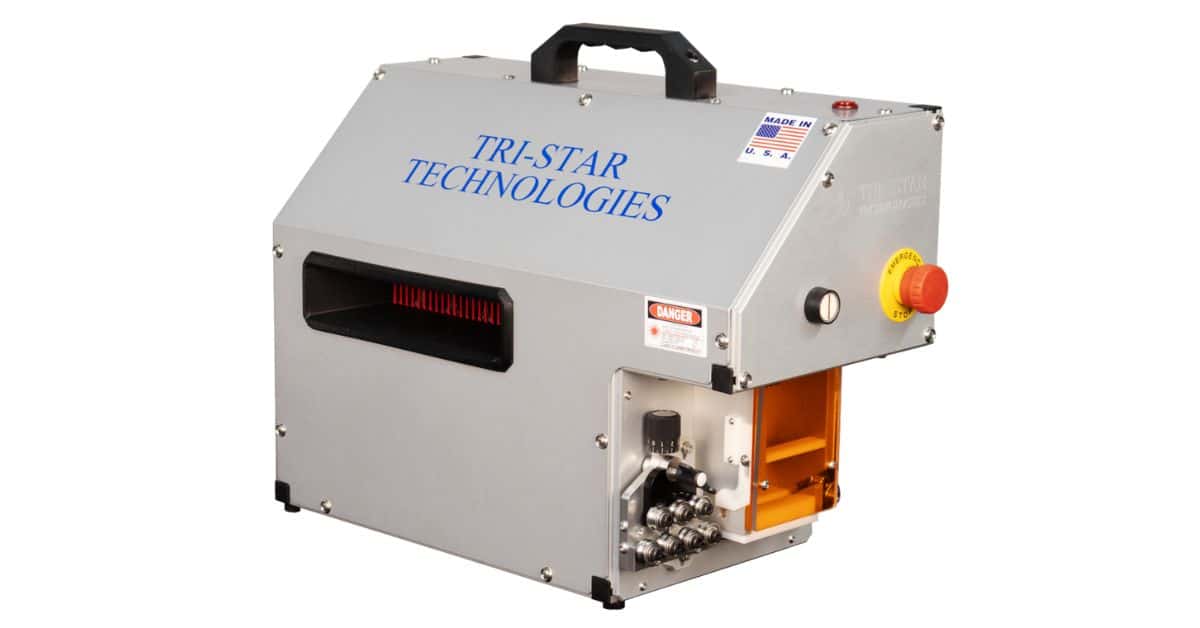
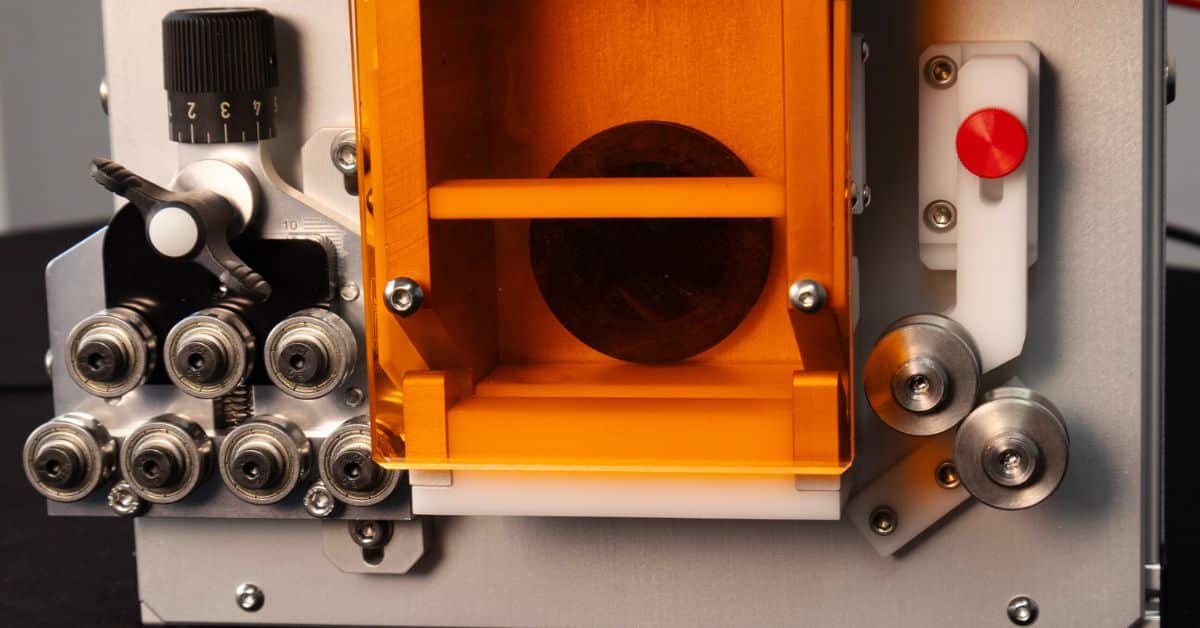
Tri-Star Technologies’ UV laser systems excel in medical device manufacturing, aerospace wire marking, and pharmaceutical applications where there can be no compromise of material integrity. The technology creates permanent marks on materials like ETFE and PTFE insulated wires through interaction with titanium dioxide particles embedded in the insulation. UV laser marking of aerospace wires satisfies stringent industry standards, including SAE International documents AIR5558, AIR5468B, and AS5649.
Advantages of Laser Marking Methods
Precision
Laser marking offers precision far exceeding traditional methods. It enables microscopic text, complex graphics, and intricate patterns unachievable with mechanical or inkjet systems.
Permanence
A key advantage of laser marking is its permanence. Marks resist fading, wear, chemical exposure, and environmental conditions that compromise traditional methods. This durability guarantees traceability throughout product lifecycles, meeting stringent regulatory requirements and customer expectations.
Non-Contact Processing
Laser marking is a non-contact process, which eliminates tool wear, consumable costs, and mechanical stress on parts. Production runs continue without interruption, without the need for tool changes or ink replacement, and maintain consistent marking quality regardless of production volume.
Versatility
Laser systems offer exceptional versatility, handling diverse materials and applications with software adjustments rather than hardware modifications. The same system can mark metal components, plastics, or glass by simply changing parameter settings.
Environmental Benefits
The environmental benefits of laser marking are significant. It eliminates the need for inks, solvents, and chemical consumables, producing minimal waste. This reduces disposal concerns and contributes to more sustainable manufacturing processes.
Key Comparisons: Performance Metrics
Precision and Accuracy
Laser marking achieves positioning accuracy within micrometers, enabling fine text, precise graphics, and accurate placement that traditional methods cannot match. UV laser systems create marks with feature sizes below 25 micrometers, supporting applications requiring dense information in limited space.
Traditional methods typically achieve positioning accuracy within tenths of millimeters. While adequate for many applications, this precision level cannot support miniaturized components or high-density marking requirements.
Material Compatibility
Laser systems handle metals, plastics, ceramics, glass, and composite materials through wavelength selection and parameter optimization. UV lasers excel with temperature-sensitive materials, while fiber lasers optimize metallic applications.
Traditional methods show material limitations based on physical properties. Mechanical engraving requires materials hard enough to support cutting forces, while inkjet depends on surface porosity and chemical compatibility.
Durability and Permanence
Laser marks integrate with base materials through thermal or photochemical processes, creating permanent identification that resists environmental degradation. UV laser marking on aerospace wires maintains legibility after 770 hours at 229°C and simulated 17-year UV exposure testing.
Traditional marks depend on adhesion, absorption, or mechanical retention. Environmental exposure, handling, and cleaning procedures can compromise mark integrity over time.
Cost-Effectiveness
Initial laser system costs exceed traditional alternatives, but operational savings accumulate through the elimination of consumables, easier maintenance, and greater productivity. Total cost of ownership calculations favor laser technology over multi-year periods. Traditional systems require ongoing expenses for inks, tools, maintenance, and replacement parts that increase operational costs.
Tri-Star Technologies’ Laser Marking Solutions
As a laser marking machine manufacturer, Tri-Star Technologies specializes in advanced laser marking solutions, offering comprehensive consultation services to assist manufacturers in deploying optimal identification systems. Our technical experts possess deep expertise in laser applications, analyzing specific application requirements, substrate material properties, production throughputs, and stringent quality standards. To discover how our laser marking expertise can enhance your manufacturing processes, contact Tri-Star Technologies today for a consultation.