




10 Top Factors That Affect Laser Mark Quality
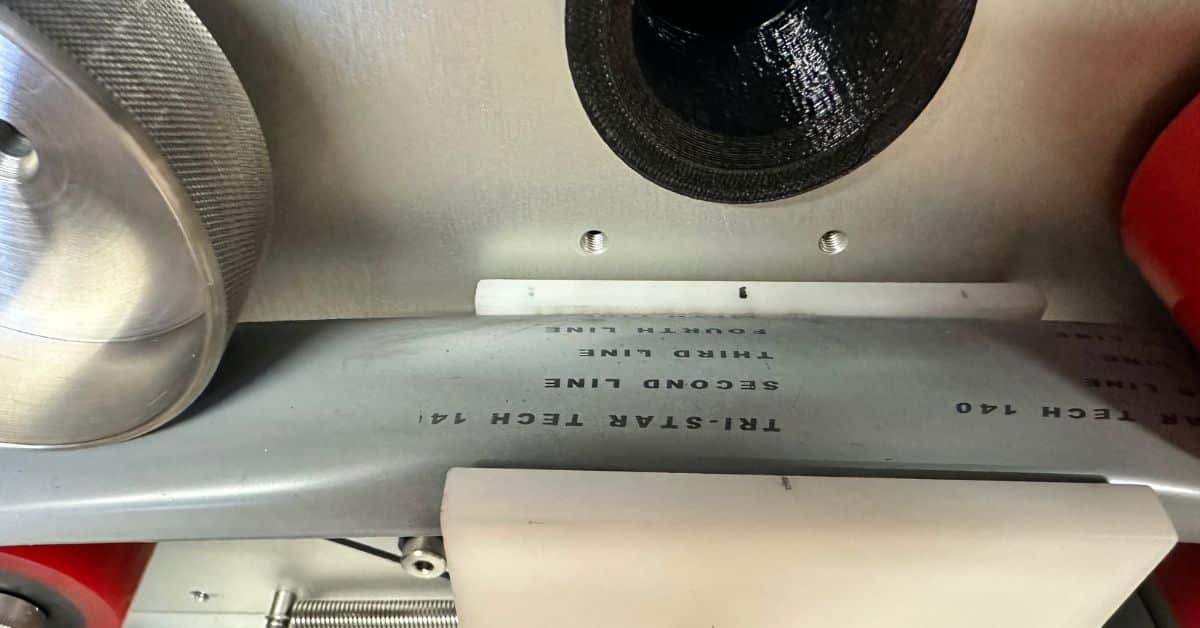
Laser marking is an indispensable technology across numerous industries, from aerospace and medical devices to consumer electronics. Its ability to create permanent, high-resolution marks guarantees traceability, branding, and compliance with stringent standards. However, the quality of a laser mark depends on a complex interplay between the laser system, the material it is marking, and the process parameters.
Understanding these factors is crucial for any organization that relies on laser marking for its manufacturing processes. In this guide, we’ll explain the top factors that affect laser mark quality.
1. Laser Type and Wavelength
The type of laser and its wavelength are fundamental to the marking process. Different materials absorb light at various wavelengths. The material’s surface must absorb the laser’s radiation to create a mark.
For example, UV lasers, which typically operate at 355 nm, are highly effective for marking plastics and other sensitive materials. The high-energy photons of UV light trigger a photochemical reaction rather than a thermal one, which prevents melting or burning. Tri-Star Technologies uses 355 nm solid-state UV lasers in systems such as the M100L-FG-TT-A to produce non-destructive marks on various substrates.
2. Material Composition and Properties
The physical and chemical properties of the material the laser is marking play a decisive role in the final quality. Factors such as the material’s color, density, and chemical composition determine how it interacts with the laser beam.
For many aerospace applications, the goal is a simple color change without altering the material’s surface integrity. To achieve this laser mark requires specific additives in the material itself.
3. The Role of Additives like Titanium Dioxide
Another top factor that affects laser mark quality, especially on polymers in the aerospace industry, is the presence of an additive such as titanium dioxide (TiO₂). This substance is a common white pigment in wire insulation. TiO₂ has a unique property: it intensely absorbs UV radiation with wavelengths shorter than 380 nanometers.
Irradiating TiO₂ particles with a UV laser permanently changes them from white to dark blue or black. This photochemical reaction occurs within the material, creating an embedded mark 10-20 micrometers under the surface. This makes the mark indelible and irremovable without destroying the material’s top layer.
4. Concentration of Additives
While adding TiO₂ is crucial, technicians must carefully control its concentration. The contrast of the mark is proportional to the TiO₂ concentration, but using too much can compromise the insulation’s structural integrity.
Generally, a concentration of two to four percent by weight is sufficient to achieve excellent contrast without causing damage. Wires and cables the aerospace industry uses, such as BMS 13-48 and M22759/34, contain the appropriate amount of TiO₂ to ensure they are UV laser-markable and meet specifications such as Boeing’s BAC 5152.
5. Material Color
The base color of the material significantly affects the legibility of a laser mark. Because the TiO₂ photochemical process turns a white pigment dark, it works best on light-colored materials. Laser marking can legibly imprint on white, gray, yellow, blue, and pink insulations.
Attempting to mark a dark-colored material using this method would result in a low-contrast mark that is difficult or impossible to read. This is a primary limitation of the color-change marking technology, making material selection a critical step in the process design.
6. Laser Power and Energy Density
The laser’s power and the energy density it delivers to the material’s surface are critical parameters. Power, which we measure in watts, is the rate of energy delivery per unit of time. Energy density, or fluence, refers to how concentrated that energy is.
Too little power may result in a faint, low-contrast mark. Conversely, excessive power can cause burning, melting, or ablation, damaging the material. This is particularly unacceptable for sensitive aerospace wires or medical devices that require sufficient material integrity. Finding the optimal power setting is a balancing act between achieving sufficient contrast and avoiding thermal damage.
7. Laser Pulse Duration
Pulse duration —the length of time each laser pulse lasts —is another important factor. Cable marking machines often use very short pulses, typically in the nanosecond range. These extremely brief pulses deposit energy so quickly that there is no time for regular heat exchange between the additive particles and the surrounding polymer matrix.
This confines the chemical modification to the pigment particles themselves, preventing thermal damage to the substrate. This “cold marking” process allows permanent, high-contrast marks without altering the material’s properties, a key benefit in long-term stability.
8. Marking Speed
The speed at which the laser beam moves across the material surface affects both the mark quality and the production throughput. Marking speed, which we measure in feet per minute for wire marking, must synchronize with the laser’s pulse frequency and power.
If the speed is too high, the laser pulses may not overlap sufficiently, creating a dotted or inconsistent mark. If it’s too slow, it can deliver excessive energy to one spot, causing burning. Advanced systems like the Tri-Star M-100L-FG-TT-A can operate at speeds up to 100 feet per minute while maintaining excellent mark quality, meeting stringent industry requirements like MIL-W-5088L.
9. Focus and Beam Spot Size
The laser beam must precisely focus on the material’s surface. The spot size, or the diameter of the beam, determines the mark’s resolution. A smaller spot size allows for finer details and sharper characters, which is essential for printing small text, logos, or barcodes.
An incorrect focus for the beam will result in a larger, less-defined spot, leading to blurry, illegible marks. Modern laser marking systems utilize high-speed scanners and precise optics to maintain a consistent focus and spot size across the entire marking area.
10. Software and Programming
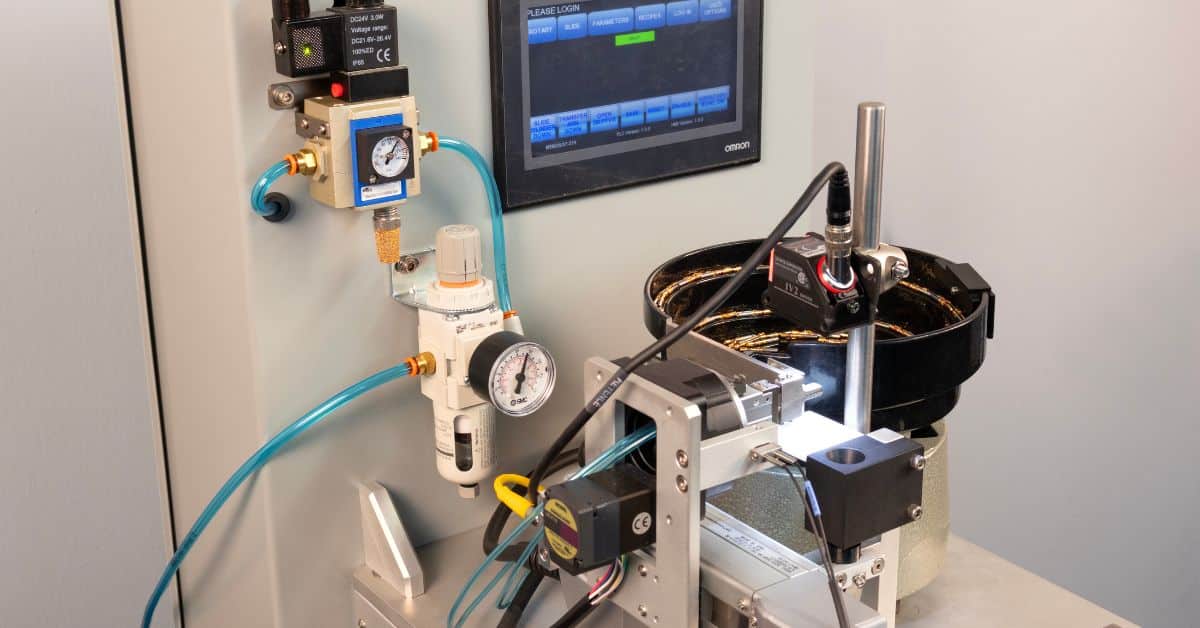
The software that controls the system is also an influential factor in mark quality. User-friendly software enables operators to easily program the mark’s content, including alphanumeric text, fonts, languages, and logos. The software controls character size, spacing, and orientation (horizontal or vertical).
Complex jobs, such as marking different codes on separate zones of a wire, require sophisticated software. Tri-Star’s systems, for example, offer unlimited font selection via TrueType fonts and full graphics capabilities, providing the flexibility needed to meet diverse and complex marking requirements for customers such as Boeing, Airbus, and General Dynamics.
Superior Marking Quality With Tri-Star Technologies
Creating a high-quality laser mark is a sophisticated process that requires careful consideration of numerous interconnected factors. From the fundamental choice of laser and material to the precise calibration of power, speed, and software, each element plays a critical role.
Tri-Star Technologies has been a leader in developing cutting-edge laser marking systems for the aerospace, medical, and pharmaceutical industries for decades. Our deep understanding of these factors allows us to deliver solutions that meet the most rigorous standards. To see how your materials perform, we are happy to evaluate samples and provide a detailed analysis.